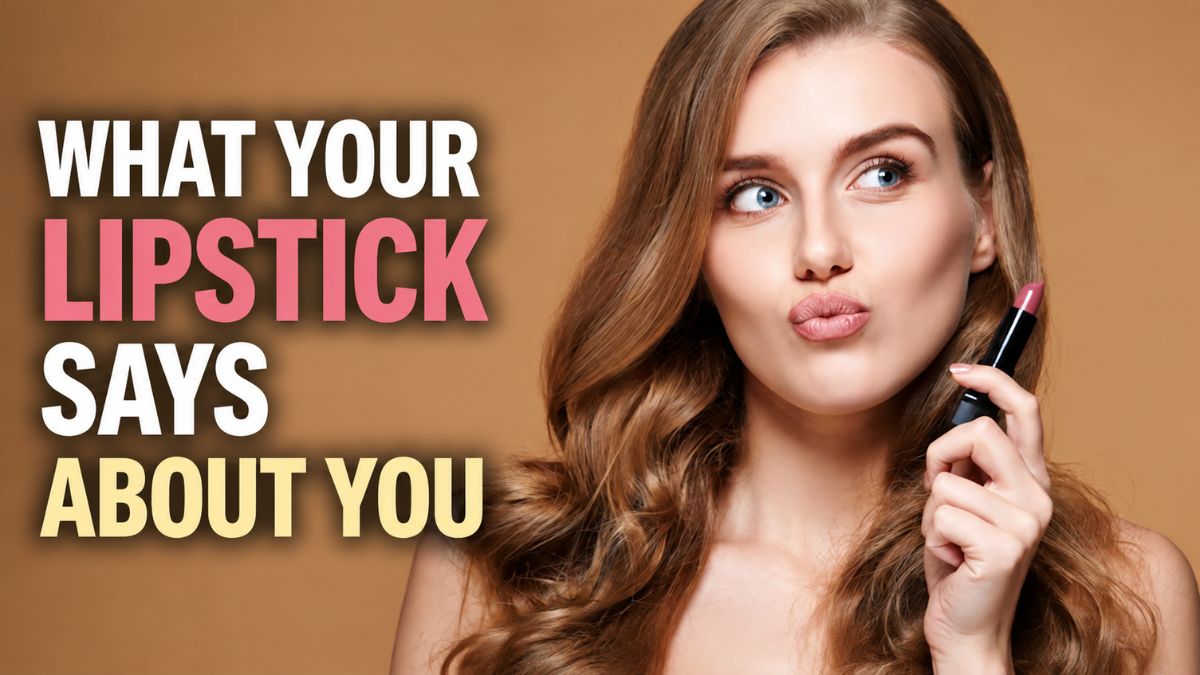
Lipstick can be a small part of a daily beauty routine, but the shade someone repeatedly chooses can sometimes reflect how they want to present themselves. A bold red before an important meeting, a neutral nude for everyday life or no lipstick at all can each be connected to different preferences around appearance and self-expression.
That does not mean a lipstick shade can reveal someone’s personality with certainty. Psychology does not support treating makeup choices as a fixed personality test. Instead, beauty routines can offer clues about self-image, confidence, mood and the way a person wants to be perceived.
The motivation behind the choice may be more informative than the colour itself.
Red
Red lipstick has long been associated with confidence, visibility and self-expression. A person who regularly chooses red may enjoy making a noticeable statement through their appearance.
Psychologist Patricia Sánchez suggests that bold shades such as red or burgundy can sometimes be associated with confidence, determination and a willingness to stand out. For some people, applying a strong colour may also create a sense of readiness before entering a social or professional setting.
However, the same choice can have a different psychological meaning for someone else. A person might wear red because they enjoy the colour, while another might use it when seeking reassurance or external validation.
The shade itself cannot tell us which explanation applies.
Nude
Neutral shades can offer a more understated approach to makeup. Beige, nude and soft pink tones may appeal to people who prefer a polished appearance without drawing significant attention to their lips.
These choices can be consistent with a calmer or more minimalist approach to beauty. They may also reflect practicality, particularly for people who want makeup that works across different settings.
Still, choosing a neutral lipstick does not automatically indicate a quiet personality. Someone who wears nude lipstick may be highly confident and simply prefer subtle colours.
The important distinction is between appearance and personality. A colour preference can express style without defining character.
Soft
Lighter shades can create a softer visual effect and may appeal to people who prefer a gentle or natural appearance.
According to Sánchez, subtle colours can sometimes be associated with a calmer presentation while still reflecting inner strength. This highlights an important point about confidence: it does not always need to be visually dramatic.
Some people express confidence through bold colours, while others feel most comfortable with understated choices. Neither approach is inherently more confident than the other.
Personal comfort often plays a significant role in how someone chooses to present themselves.
Bare
Not wearing lipstick can also be a meaningful personal choice, although it should not automatically be interpreted as a sign of low confidence.
Some people simply prefer a natural appearance, have little interest in makeup or find that lipstick does not fit their daily routine. The growing popularity of minimalist beauty has also made bare-faced looks more common.
There can be situations where avoiding makeup is connected with a desire not to attract attention. However, that possibility should not be treated as a universal explanation.
Someone can feel extremely comfortable with their appearance without using cosmetics at all.
Mood
Lipstick preferences can change over time because appearance choices are not necessarily fixed.
A person might choose red when they want to feel more noticeable, nude when they want something practical or skip lipstick altogether on a relaxed day. Mood, lifestyle, age and changing circumstances can all influence these decisions.
Beauty routines can therefore function as a form of self-expression that changes with context.
This is also why it is difficult to assign a single personality type to a particular lipstick shade. The same person may use different colours for different situations.
Confidence
The connection between makeup and self-esteem is more complicated than simply saying lipstick makes someone confident.
Makeup can sometimes help people feel prepared or express an aspect of their identity, but it does not create a person’s underlying sense of self-worth. Confidence that depends entirely on appearance can become fragile when circumstances change.
A healthier approach is to view makeup as one form of personal expression rather than a requirement for feeling attractive or capable.
Someone may feel confident in a bold red lipstick, while another person may feel equally confident without any makeup. Both experiences can be genuine.
Expression
Ultimately, lipstick may tell us more about how someone chooses to express themselves than about their fixed personality.
A person who enjoys dramatic colours may value experimentation and visibility. Someone who prefers subtle shades may appreciate simplicity and versatility. Another person may avoid lipstick because they feel most comfortable without it.
But these are possibilities, not psychological rules.
The more useful question is not “What does this shade say about someone’s personality?” but “What does this choice mean to the person wearing it?” Makeup can be creative, practical, comforting or simply enjoyable. Its psychological significance depends largely on the individual’s relationship with their appearance.
Lipstick is therefore best understood as one small part of self-expression. Whether someone chooses red, nude, soft pink or no lipstick at all, the choice does not determine their confidence or worth. What matters more is whether they feel comfortable making that choice for themselves.
FAQs
Does red lipstick mean confidence?
It may express confidence, but colour alone cannot define personality.
What can nude lipstick suggest?
It may reflect a preference for subtle or practical makeup.
Does no lipstick mean low confidence?
No, many people simply prefer a natural or minimalist appearance.
Can lipstick choices change with mood?
Yes, people often change shades based on mood and circumstances.
Can makeup improve self-esteem?
It may support expression, but lasting self-esteem comes from within.