
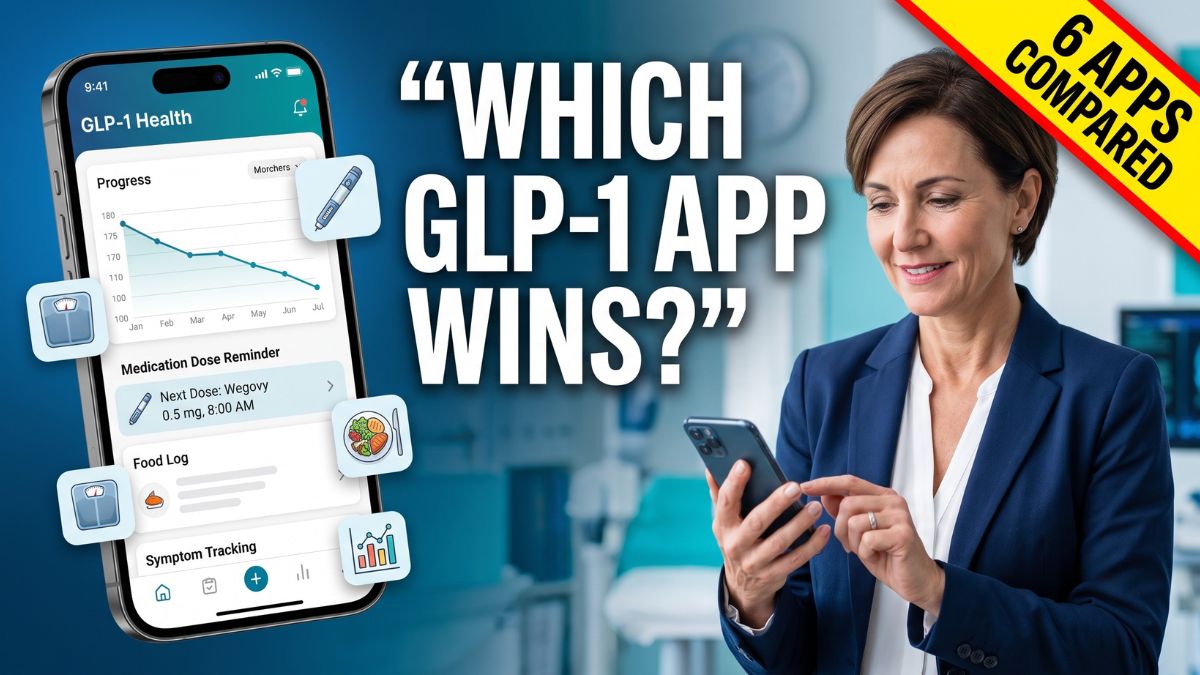
If you are using a GLP-1 medication such as semaglutide or tirzepatide, tracking your progress can make the treatment easier to understand. Weight is only one part of the picture. Medication doses, side effects, meals, activity, measurements, and how you feel day to day can also provide useful context.
But which GLP-1 tracker gives you the most useful features? With several apps now offering medication reminders, weight charts, food logs, and health insights, the best choice depends on what you actually want to monitor.
Here is a practical comparison of six types of GLP-1 tracking apps and the features that matter most.
Tracking
A useful GLP-1 app should make progress easy to see. Most trackers let you record your weight and display changes over time, often through a graph.
Some go further by allowing users to record waist measurements, body measurements, symptoms, and other health information. This can be helpful because weight does not always change at a steady pace.
Think of tracking like keeping a car’s dashboard in view. One reading rarely tells the whole story. Trends over several weeks can provide a more useful picture.
Medication
Medication tracking is particularly important for people who need to follow a regular injection schedule.
Many GLP-1 apps include reminders for upcoming doses and allow users to record when a medication was taken. Some also let you store dose information and treatment history.
This can reduce the need to remember everything manually, especially when your schedule is busy.
However, an app should not replace instructions from your doctor or pharmacist. Medication changes should always be discussed with a qualified healthcare professional.
Nutrition
Food tracking is another common feature. Depending on the app, you may be able to log meals, calories, protein, carbohydrates, or other nutrients.
For people taking GLP-1 medications, food tracking can sometimes help identify eating patterns, particularly when appetite changes. A simple record may reveal that certain meals are easier to tolerate or that you are consistently eating less than before.
The most useful app is not necessarily the one with the biggest food database. A complicated tracker that you stop using after a week offers little value.
Symptoms
Side-effect tracking can make some GLP-1 apps more useful than basic weight-loss trackers.
Users may be able to record symptoms such as nausea, constipation, stomach discomfort, fatigue, or changes in appetite. Keeping these notes can help you notice patterns and gives you information to discuss with your healthcare provider.
Some apps also allow free-text notes, which can be useful when a symptom does not fit neatly into a predefined category.
Insights
Some trackers focus heavily on charts and analytics. Others aim to turn your entries into simple observations about your progress.
For example, an app might show weight trends, changes in measurements, adherence to medication schedules, or patterns in food and activity records.
More data is not automatically better, though. A clean dashboard with information you understand may be more useful than dozens of complicated metrics.
| Feature | Basic Tracker | Advanced Tracker | Best For |
|---|---|---|---|
| Weight logging | Yes | Yes | Progress monitoring |
| Dose reminders | Sometimes | Usually | Medication routines |
| Food logging | Sometimes | Usually | Nutrition tracking |
| Symptom notes | Limited | Often | Side-effect monitoring |
| Progress charts | Basic | Detailed | Long-term trends |
| Health insights | Limited | Often | Pattern recognition |
Privacy
Health information is sensitive, so privacy deserves attention when comparing GLP-1 apps.
Before entering medication details, weight, symptoms, or other personal information, check the app’s privacy policy. Look for information about what data is collected, how it is stored, and whether it may be shared with third parties.
You should also consider whether you really need every feature an app offers. If all you want is a medication reminder and weight chart, a simpler tracker may collect less information than a broader health platform.
Choices
There is no single GLP-1 tracker that is automatically the best for everyone.
If medication reminders are your priority, focus on scheduling and dose-history tools. If you want to understand changes in appetite and eating habits, nutrition features may matter more. If side effects are your main concern, look for detailed symptom logging.
For users who want an all-in-one experience, an advanced health tracker may provide the most information in one place. But convenience should be balanced with usability, cost, and privacy.
Ultimately, the tracker that gives you the most is the one you will actually use consistently. GLP-1 treatment involves more than watching a number on a scale, and a well-designed app can help organize the information you may want to review with your healthcare team.
FAQs
What should a GLP-1 tracker record?
Weight, doses, symptoms, food, and other useful health data.
Do GLP-1 apps track medication doses?
Many apps let users record doses and set medication reminders.
Can GLP-1 apps track side effects?
Some apps let users record symptoms and monitor changes over time.
Are GLP-1 trackers free?
Some are free, while others charge for advanced features.
Can an app replace medical advice?
No. Use your healthcare provider for treatment and medication decisions.