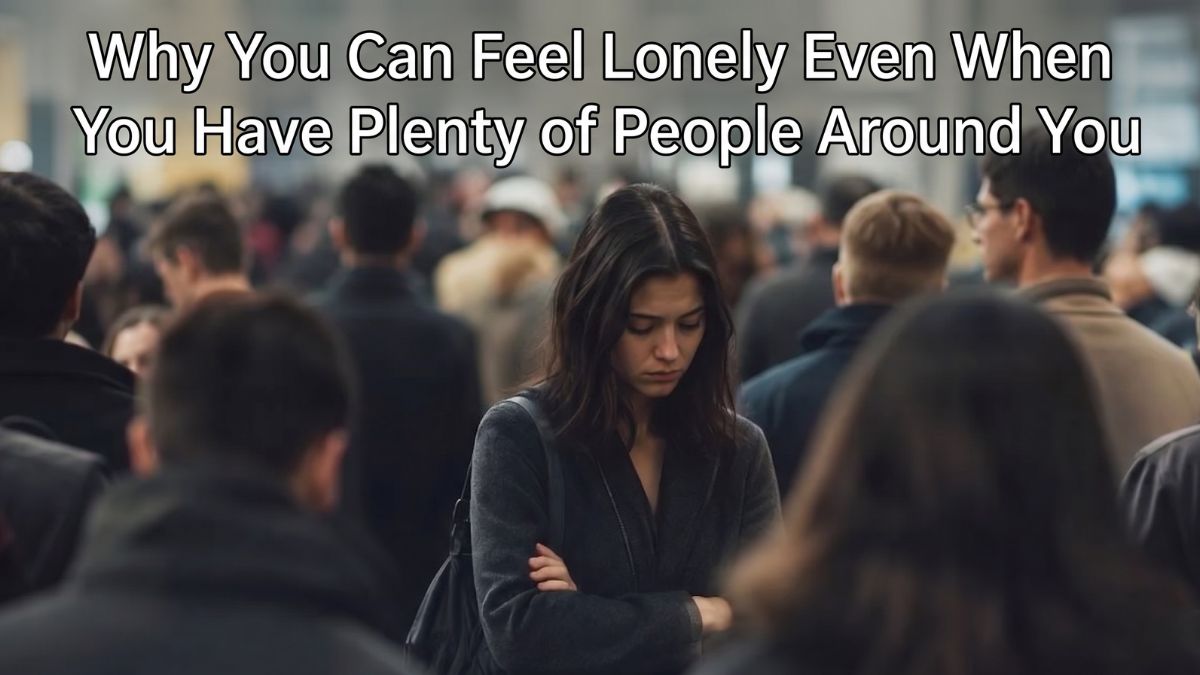
When adults talk about loneliness, the conversation often becomes one about personal failure. A lonely person may be described as shy, socially awkward or someone who simply is not trying hard enough to connect.
Psychology offers a more nuanced explanation.
Loneliness is not necessarily a character flaw or a simple measure of how many people someone knows. Researchers describe it as a subjective experience that can occur even when a person has friends, family, coworkers and a busy social schedule.
Social neuroscientist John Cacioppo described loneliness in terms of perceived social isolation – the feeling that a person’s relationships are not meeting important social needs.
That distinction matters. A person can have many relationships and still lack closeness, understanding, support or a sense of belonging.
Loneliness
Loneliness and being alone are not the same experience.
Social isolation generally refers to having limited social contact, while loneliness describes the subjective feeling that one’s social needs are not being adequately met.
This explains why one person can spend an evening alone and feel perfectly comfortable, while another can sit in a crowded room and feel disconnected.
The number of relationships is only part of the picture. The quality and meaning of those relationships also matter.
Someone may know dozens of people but have nobody they feel comfortable talking to about personal concerns. Another person may have only a few close relationships and experience a strong sense of connection.
Belonging
The need for social connection is considered an important human motivation.
Psychologists Roy Baumeister and Mark Leary’s Need to Belong theory proposes that people have a fundamental motivation to form and maintain meaningful interpersonal relationships.
From an evolutionary perspective, belonging to a group historically provided important advantages. Social exclusion could have carried serious consequences, which may help explain why loneliness can feel emotionally painful.
John and Stephanie Cacioppo’s evolutionary theory of loneliness describes loneliness as a potential social alarm system. Similar to how hunger can signal a need for food, loneliness may signal that important social needs are not being met.
This changes the question from “What is wrong with this person?” to “What kind of connection is missing?”
Adulthood
Adult life can make meaningful connection harder to maintain.
Work responsibilities, parenting, caregiving, relocation, changing routines and differences in schedules can gradually reduce opportunities for regular interaction.
Psychologist Robert Weiss, an important early researcher in loneliness, proposed that people need different forms of social connection, including emotional closeness, social integration, guidance and reassurance.
This means loneliness can occur even when some relationships remain strong.
A person may have a supportive family but miss close friendships. Someone else may have friendly coworkers but lack emotional intimacy. Another person may have a partner but feel disconnected from their wider community.
The issue may not be the absence of people. It may be the absence of a particular kind of relationship.
Social Perception
Loneliness can also influence how people interpret social situations.
Research associated with Cacioppo’s work suggests that perceived social isolation can increase attention to potential social threats and make people more sensitive to signs of rejection.
This can create a difficult cycle.
A lonely person may become more cautious when meeting others. They may worry about being rejected, hesitate to reach out or interpret an ambiguous response negatively.
Those reactions can make future social interaction feel more difficult, potentially reinforcing the original sense of disconnection.
This does not mean lonely people necessarily lack social skills. Loneliness and social ability are different concepts. Someone can communicate confidently and maintain relationships while still experiencing loneliness.
Understanding
Simply being around other people does not always produce a feeling of connection.
Research in social neuroscience has explored whether loneliness is also related to differences in how people experience and interpret the social world.
A 2021 brain-imaging study reported that lonely individuals showed more idiosyncratic patterns of neural responses while viewing naturalistic stimuli. The findings have been discussed in relation to feeling less psychologically aligned with other people’s experiences.
This may help explain why someone can say, “I have people around me, but I still feel alone.”
The missing element may be a feeling of being understood rather than a lack of social contact itself.
Technology
Modern communication has made it easier to stay in contact, but contact and connection are not necessarily interchangeable.
Messages, social media posts and online conversations can help maintain relationships, particularly across distance. However, they may not always provide the same experience as meaningful conversation, shared activities or emotional support.
Loneliness is increasingly viewed as a multidimensional experience influenced by personal relationships, communities, culture and broader social circumstances.
A 2025 review argued that responses to loneliness need to consider individual, relational and societal factors rather than focusing exclusively on individual behavior.
This suggests that loneliness cannot always be explained by what one person is or is not doing.
Transitions
Loneliness can become more likely during periods of change.
Moving to a new city, starting a different job, becoming a parent, experiencing bereavement, retiring or working remotely can disrupt established patterns of connection.
Even positive changes can alter a person’s social environment.
Someone may have once seen friends several times a week but gradually lose that routine because of work or family responsibilities. The relationships may still exist, but the regular opportunities for connection have changed.
Loneliness in such circumstances does not necessarily indicate a personal failure. It may reflect a mismatch between current circumstances and existing social needs.
Chronicity
Loneliness can sometimes serve a useful signaling function by drawing attention to unmet social needs.
The concern is when it becomes persistent and begins affecting how a person thinks about themselves, relationships and other people.
Chronic loneliness can be associated with withdrawal, increased sensitivity to rejection and difficulties maintaining social engagement. When loneliness is persistent or accompanied by significant distress, seeking support can be appropriate.
The aim is also not necessarily to accumulate more contacts. A larger social network does not automatically resolve loneliness.
Meaningful connection depends on factors such as trust, emotional closeness, shared experience and feeling understood.
Connection
Psychology suggests that adult loneliness is often misunderstood because people tend to measure connection by numbers.
A person can have hundreds of contacts and still feel disconnected. Someone with two or three close relationships may feel deeply supported.
Loneliness is therefore not automatically evidence that someone has failed socially. It can be a signal that an important need for belonging, understanding or meaningful connection is not being met.
Knowing that distinction may make conversations about loneliness more useful and less judgmental. Instead of asking how many people someone has around them, it may be more helpful to consider whether those relationships provide the kind of connection that person actually needs.
FAQs
Can you feel lonely around people?
Yes. Loneliness depends on perceived connection, not just social contact.
Is loneliness the same as being alone?
No. Being alone can be comfortable, while loneliness reflects disconnection.
Why can adults become lonely?

Work, relocation, caregiving and life changes can reduce meaningful connection.
Does loneliness mean poor social skills?
No. Social ability and loneliness are separate experiences.
What matters more than social contacts?
Feeling understood, supported and connected can matter more than numbers.