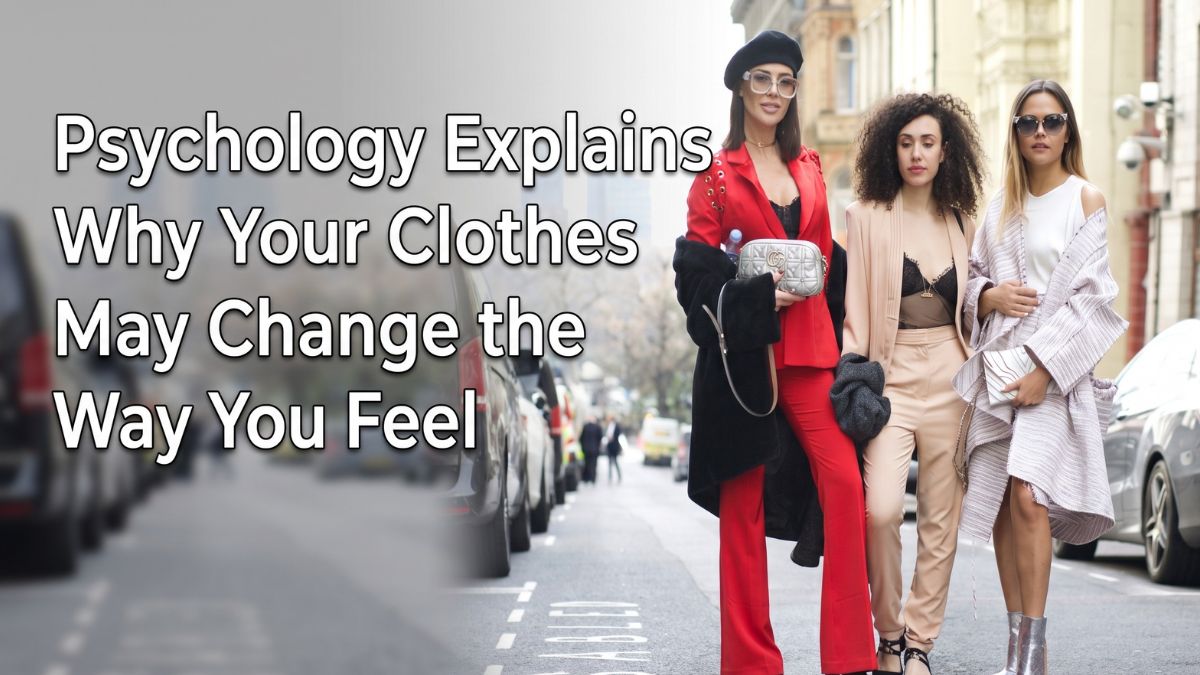
The clothes you wear can influence more than how you look. A well-fitted blazer, formal suit or outfit that makes you feel prepared may subtly affect your posture, mood and confidence. Psychology researchers have studied this connection through a concept known as enclothed cognition, which examines how clothing and its symbolic meaning can influence the wearer’s thoughts, feelings and behavior.
The idea does not mean that putting on a particular outfit automatically creates confidence. Instead, research suggests that clothing can act as a psychological cue, especially when the person wearing it associates the outfit with qualities such as competence, professionalism or authority.
Clothing
One of the most widely discussed studies in this area came from Hajo Adam and Adam D. Galinsky in 2012. Published in the Journal of Experimental Social Psychology, the research introduced the term “enclothed cognition” and examined whether clothing could influence attention.
In their experiments, participants who wore a lab coat associated with a doctor showed greater attention than those wearing ordinary clothing. The symbolic meaning of the garment also mattered. The same type of coat produced different effects when participants were told it was a doctor’s coat rather than a painter’s coat.
The findings suggested that clothing is not simply something people wear. It can also carry symbolic associations that influence psychological processes. When an outfit is linked with professionalism, competence or authority, wearing it may help reinforce those qualities in the mind of the wearer.
Confidence
Power dressing is often associated with clothing that makes a person feel polished, capable and prepared. Part of the effect may come from self-perception. When people believe they look appropriate for a particular role, they may feel more comfortable adopting the behavior associated with that role.
Recent research provides additional context. A 2025 study published in the Italian Journal of Marketing examined the relationship between formal clothing and self-confidence. Across four studies, researcher Hao Liu found that formal attire increased consumers’ self-confidence, with that increase helping explain changes in behavior.
Clothing fit can also play a role. Research involving 502 fashion consumers examined how fit affected self-evaluation, confidence and psychological well-being. The findings indicated that self-evaluation was an important part of the psychological response to clothing.
This helps explain why an expensive outfit is not necessarily a power outfit. If clothing is uncomfortable, poorly fitted or difficult to wear, it may distract rather than support confidence. A simple outfit that feels comfortable and appropriate may have a more useful psychological effect.
Impressions
Clothing can also influence how other people perceive us. Before a conversation begins, appearance can contribute to judgments about confidence, professionalism and approachability.
A 2016 study by Daniel J. Gurney and colleagues examined the relationship between clothing, posture and judgments of confidence, professionalism, approachability and perceived earning potential. The research found that attire and posture could interact when people formed impressions of others.
Other researchers have examined professional women’s clothing and how subtle differences in attire affect perceptions of intelligence, competence and power. A study involving 198 participants found that variations in professional clothing could influence these judgments.
This means clothing can operate on two levels. It may influence how people feel about themselves while also affecting how others initially perceive them. These effects are not necessarily permanent or decisive, but they can contribute to first impressions.
Fit
The role of fit is particularly important because confidence is not always connected with formal clothing. An outfit that fits comfortably can make a person feel more at ease, regardless of its price or brand.
Comfort may also help people focus on what they are doing instead of thinking about their appearance. Someone preparing for a presentation, interview or important meeting may find that clothing which feels natural allows them to concentrate more effectively.
Personal meaning also varies. One person may associate a tailored suit with authority, while another may feel more confident in smart trousers, a shirt or a well-fitted dress. There is no single outfit that produces the same psychological response in everyone.
Context
Research into clothing and psychology also has limitations. The effects associated with enclothed cognition should not be treated as a universal formula.
A 2023 paper by C. Blaine Horton, Hajo Adam and Adam D. Galinsky reviewed 105 effects from 40 studies involving 3,789 participants. Their meta-analysis raised questions about the replicability of some early enclothed-cognition findings while also identifying evidence supporting effects reported in later research.
This suggests that the relationship between clothing and psychology is more complicated than simply putting on formal clothes and becoming more confident. Personal associations, comfort, fit and social context can all affect the outcome.
For example, someone who regularly wears formal clothing may respond differently to a suit than someone who rarely wears one. Similarly, an outfit associated with an important professional role may have a different psychological meaning from the same garment worn casually.
Mindset
The practical lesson is relatively straightforward. Clothing may work as a psychological reminder of the qualities a person wants to bring into a particular situation.
Before an interview, someone might choose an outfit that makes them feel professional and prepared. Before an important presentation, they may select clothing that feels comfortable and familiar. The purpose is not to rely on clothing as a substitute for preparation, but to use it as one small part of getting into the right mindset.
This is similar to other preparation routines. Just as a person may review notes before a meeting or follow a familiar routine before an important event, choosing an appropriate outfit can provide a sense of readiness.
Ultimately, power dressing is less about a specific brand, price or style and more about the relationship between clothing and personal perception. Psychology research suggests that what people wear can influence how they think and feel, although the strength of these effects varies. An outfit that fits well, feels comfortable and reflects the role a person wants to step into may provide a modest psychological boost before they enter the room.
Clothing does not create competence or guarantee confidence. But when it carries positive personal meaning and suits the situation, it can become one of several factors that shape how a person feels and behaves.
FAQs
What is power dressing?
It means wearing clothes that can support confidence and professionalism.
What is enclothed cognition?
It describes how clothing and its meaning can influence psychological processes.
Can clothes affect confidence?
Research suggests clothing can influence self-perception and confidence.
Does clothing fit matter?
Yes, fit and comfort can influence self-evaluation and well-being.
Does expensive clothing boost confidence?
Not necessarily. Fit, comfort and personal meaning may matter more.