
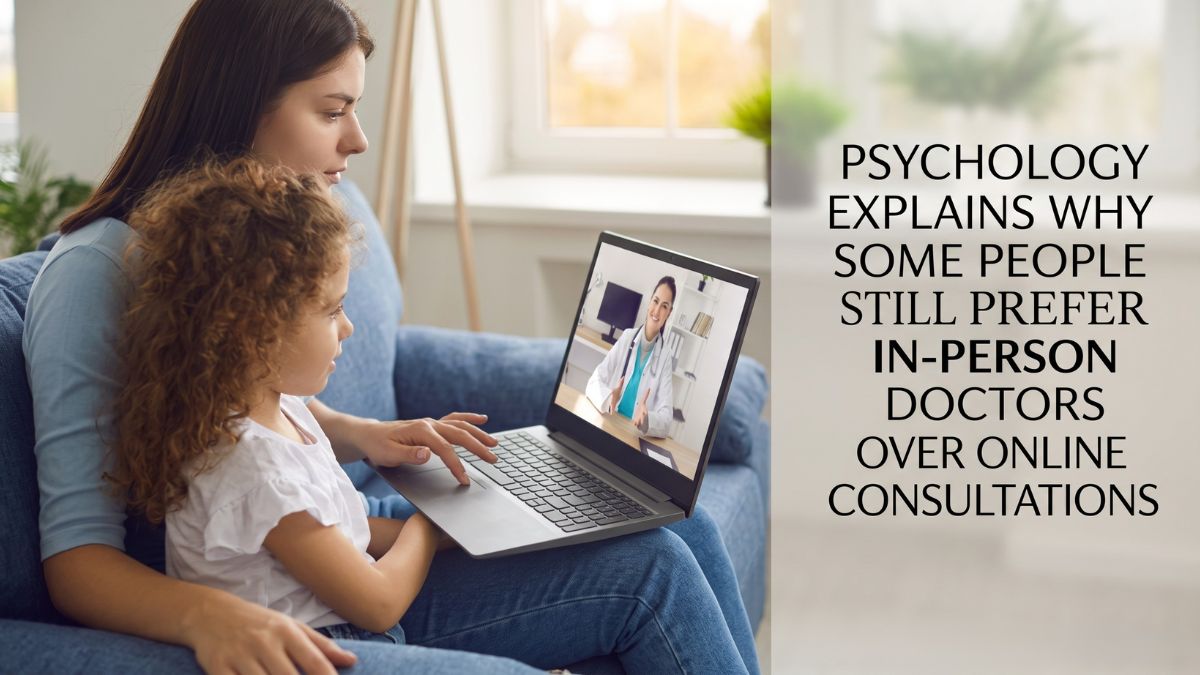
Online doctor consultations have made healthcare more accessible, particularly for people who have difficulty reaching a clinic or need advice for a routine concern. Yet some patients remain uncomfortable discussing health problems through a screen.
That hesitation is not necessarily a rejection of technology. Psychology suggests that trust in healthcare can depend on more than the information a doctor provides. Patients may also consider physical presence, the clinical environment, direct communication and the possibility of examination when deciding whether a consultation feels safe and reliable.
Health concerns can make people feel vulnerable. In that situation, a familiar clinic and face-to-face interaction may provide reassurance that a video call does not always offer.
Trust
Trust is influenced by what people hear, see and experience during an interaction. In healthcare, patients may assess whether a doctor appears competent, attentive and capable of understanding their symptoms.
An in-person appointment provides several signals at the same time. A patient can see the clinical environment, communicate directly with the doctor and, when appropriate, undergo a physical examination. These experiences can contribute to a sense that the consultation is thorough.
An online appointment removes some of those cues. The patient may see only a face on a screen, while the doctor has limited access to physical information about the patient’s condition.
For some people, this difference can create uncertainty. Their concern may be less about technology itself and more about whether the format provides enough information to make a reliable medical assessment.
Presence
Physical distance can sometimes influence psychological perceptions of trust and accountability.
A clinic is a recognizable setting associated with healthcare. A patient knows where the appointment is taking place and can directly interact with the medical professional. This physical context can contribute to a feeling of legitimacy.
An online consultation changes that experience. The doctor and patient may be in completely different locations, connected only through an internet platform.
That does not mean digital healthcare is inherently less trustworthy. Instead, it shows that some people use the physical setting as one of several signals when deciding whether they feel comfortable with medical care.
Uncertainty
Health problems often involve uncertainty. Patients may not know what a symptom means or whether it requires urgent attention. When uncertainty is already high, a consultation format that provides fewer physical cues may feel less reassuring.
A person with pain, for example, might believe that describing the sensation through a camera is not enough. They may expect the doctor to examine the affected area directly.
This can create a preference for in-person care even when the patient is comfortable using technology in other parts of life.
The issue is therefore not necessarily digital resistance. It can be a response to the perceived limits of the consultation format.
Security
The physical presence of a healthcare professional can also provide a sense of security.
Attachment and security-related psychological concepts help explain why people may seek familiar environments when they feel vulnerable or uncertain. A medical office provides a structured setting where healthcare is the central purpose.
For some patients, sitting in the same room as a doctor may therefore feel more reassuring than communicating through a device.
This response is not universal. Some people feel more comfortable with telehealth because they can speak from their own home. Personal experience, health concerns and familiarity with technology can all influence the preference.
Trust Transfer
Trust can also depend on whether confidence in one setting transfers to another.
A patient may trust a particular hospital or doctor because of previous experiences. When that same healthcare service moves online, the patient may not automatically experience the same level of confidence.
Trust Transfer Theory provides one way to understand this process. Trust developed in one environment can influence perceptions in another, but the transfer may depend on whether the new setting provides enough familiar signals.
Online healthcare platforms can therefore strengthen confidence by clearly presenting information about doctors’ qualifications, privacy procedures, consultation methods, follow-up arrangements and accountability.
Cues
People often use multiple cues when making judgments about unfamiliar situations. In healthcare, these can include the doctor’s communication style, professional setting, equipment and other visible indicators of medical practice.
An in-person appointment brings many of these cues together. An online consultation provides a narrower set.
This difference can affect how patients interpret the interaction. A person may understand that the doctor is qualified but still feel uncertain because the usual environmental signals are absent.
This is sometimes described through the idea of tangibility bias, where people can place greater confidence in things that are physically visible or concrete. A clinic is tangible. A digital consultation is mediated through technology.
The distinction does not establish that one format is medically superior in every situation. It helps explain why the experiences can feel different.
Communication
Communication becomes particularly important when physical examination is not part of the consultation.
Doctors may need to explain clearly what can and cannot be assessed remotely. Patients may also need guidance about when an in-person appointment is more appropriate.
Clear communication can reduce uncertainty. Explaining the consultation process, expected limitations, follow-up options and privacy protections can give patients more information with which to evaluate the service.
This is especially relevant for people who are uncertain about whether an online appointment can adequately address their concerns.
Preference
A preference for in-person healthcare should not automatically be interpreted as fear of technology. People may use smartphones, online banking and digital services every day while still preferring to see a doctor face to face.
Healthcare is different from many routine digital activities because it involves personal information, physical symptoms and decisions that can have important consequences.
A patient may therefore apply a higher standard of trust to medical technology than to other online services.
At the same time, skepticism should not mean automatically rejecting digital healthcare. Online consultations can be useful for many situations, depending on the patient’s needs and the healthcare professional’s assessment.
Balance
The psychology behind this behavior is ultimately about how people establish trust when they feel vulnerable.
Physical presence, familiar surroundings and direct interaction can provide reassurance for some patients. Digital consultations remove some of those cues, which may create uncertainty even when the healthcare professional is properly qualified.
That does not make online healthcare inherently unreliable, nor does it mean that every patient who prefers a clinic is resistant to change. It simply shows that people judge healthcare through both information and experience.
Knowing this distinction can help healthcare providers communicate more effectively with patients who are uncertain about online consultations. It can also help patients recognize that their hesitation may come from the format, the perceived risks or the need for physical assessment rather than from a general dislike of technology.
FAQs
Why do some people distrust online doctors?
They may feel that screens provide fewer trust and safety cues.
Is avoiding telehealth resistance to technology?
Not necessarily. Health-related uncertainty can explain the preference.
Why does physical presence matter?
It can provide reassurance, direct communication and examination.
Can digital healthcare build trust?
Yes, clear qualifications, privacy and procedures can support trust.
Are online consultations always less reliable?
No. Their suitability depends on the patient’s needs and condition.