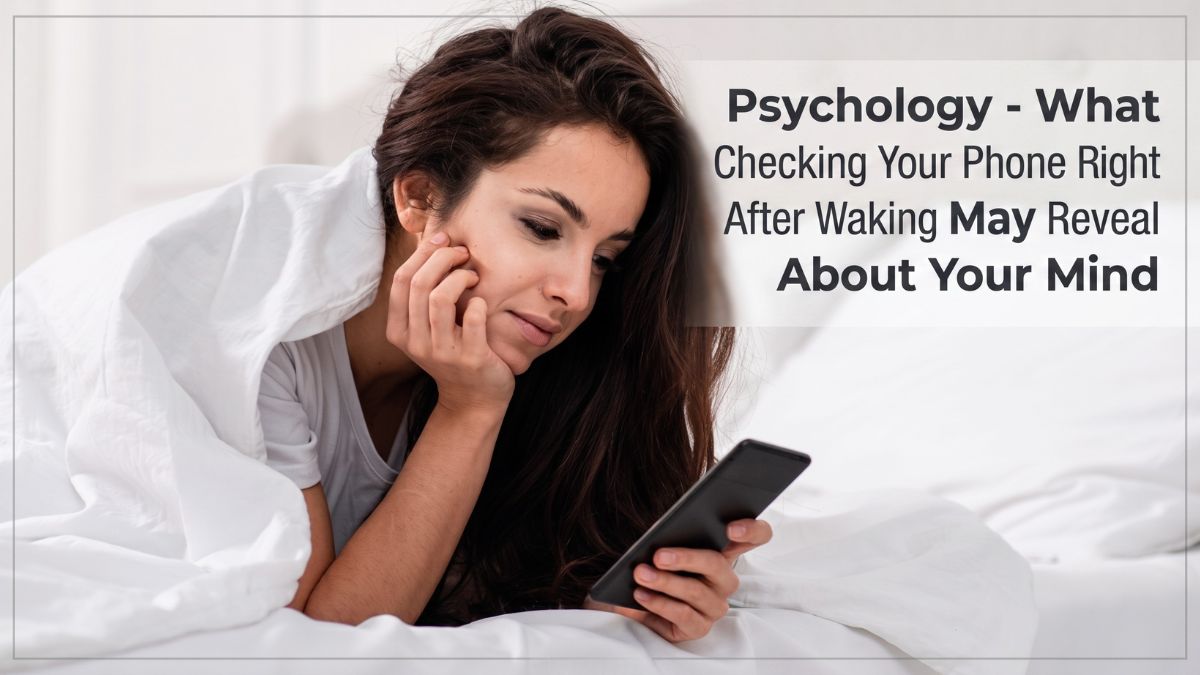
For many people, waking up and immediately reaching for a phone has become a familiar part of the morning. Before getting out of bed, they may check messages, browse social media, read the news or simply look at the time. While the behavior can seem routine, psychology and behavioral research suggest that the reasons behind it can vary.
There is no single personality type associated with checking a phone immediately after waking. The habit may be linked to learned routines, curiosity, social connection, information seeking or a preference for early stimulation. The timing and type of phone activity may also matter.
Habit
In some cases, there may be no complicated psychological explanation. Checking a phone after waking can simply become an established habit.
Research by Maxi Heitmayer and Saadi Lahlou examining smartphone behavior in everyday settings found that many interactions were initiated by users rather than being prompted by notifications. Their work highlights the role of learned routines in everyday smartphone use.
The morning phone check can follow a similar pattern. Wake up, reach for the device, unlock the screen and start scrolling. After enough repetition, the sequence can become almost automatic.
This does not necessarily indicate addiction or a psychological problem. The brain can develop strong associations between particular situations and behaviors, making the action feel natural even when there is no specific reason to check the phone.
Curiosity
A smartphone provides immediate access to information that accumulated while you were asleep. Messages may have arrived, news may have changed and social media feeds may contain new posts.
For some people, checking the phone may therefore be a way to satisfy curiosity or reduce uncertainty about what happened overnight.
A 2022 study examining morning smartphone behavior reported that 60% of participants usually checked their smartphones after waking. Social networking and messaging were among the activities reported, alongside checking the time and reading online news.
The motivation is important. Someone checking a phone to answer an important message may have a very different reason from someone repeatedly refreshing social media without intending to find anything specific.
Connection
Smartphones also provide an immediate link to other people.
A morning message from a friend, family member or colleague can create a quick sense of social connection. For people who place particular importance on staying in contact, checking messages may be one way of transitioning from the private environment of sleep to the demands and relationships of the day.
This does not necessarily mean the person is overly dependent on their phone. Social communication is one of the main functions smartphones provide, and checking for messages can be a practical part of daily life.
The more useful question is whether the behavior is purposeful or whether the person feels unable to resist checking.
Stimulation
The first few minutes after waking can be quiet and relatively uneventful. A smartphone can change that almost instantly.
News headlines, videos, messages and social-media updates provide a steady stream of information. Some people may simply prefer beginning the day with this level of activity rather than spending time in silence.
Research on smartphone use and mental health suggests that the timing and type of use can make a difference. A 2026 study examining smartphone engagement and mental-health symptoms found that different patterns of use had different associations. Greater overall smartphone exposure in the morning was associated with reported anxiety, while some specific forms of social and process-related use showed different patterns.
These findings should be interpreted carefully. Morning phone use by itself does not establish that someone is anxious or that smartphone use directly causes anxiety.
Attention
Another consideration is the effect of notifications and digital information on attention.
Notifications can interrupt ongoing thought and draw attention toward unrelated information. Research has found that alerts can contribute to task-irrelevant thoughts, even when people do not actively engage with their phones.
More recent research has also examined the effects of social-media notifications on cognitive processing. Findings reported by Hippolyte Fournier and colleagues in 2026 suggested that social-media notifications could temporarily slow cognitive processing, with stronger effects among people who interacted with smartphones more frequently.
This can matter in the morning because the phone may introduce several competing demands before the person has decided what deserves attention.
Instead of beginning the day with one clear task, someone may suddenly be thinking about an email, a news story, a message and several social-media updates.
Motivation
The most useful psychological question may not be whether you check your phone after waking, but why you do it.
If you check because you are expecting an important message, the behavior has a clear purpose. If you reach for the phone without consciously deciding to do so, habit may be playing a larger role. If you feel uncomfortable until you know what happened overnight, uncertainty or information seeking could be involved.
It can also help to consider how you feel afterward.
Do you feel informed and connected, or distracted and mentally crowded? Does checking the phone take a minute, or does it regularly turn into 30 minutes of scrolling? These details provide more context than the simple fact that someone uses a phone in the morning.
Balance
Checking a phone after waking is not inherently harmful. For many people, it is simply a practical part of modern life. However, the habit may be worth reconsidering if it repeatedly causes stress, distraction or difficulty focusing on other morning activities.
One simple way to understand the habit is to delay the first phone check for 10 or 15 minutes. That time could be used to get dressed, drink water, stretch or prepare for the day.
If delaying the check feels unusually difficult, it may indicate that the behavior has become more automatic than you realized. That does not diagnose a psychological condition, but it can provide useful information about your routine.
Ultimately, psychology does not support the idea that everyone who checks their phone immediately after waking has a particular personality or mental-health issue. The behavior can reflect habit, curiosity, social connection, information seeking or a preference for stimulation. Looking at the motivation, frequency and consequences gives a more accurate picture than the behavior alone.
FAQs
Is checking your phone after waking unhealthy?
Not necessarily; the effect depends on how and why you use it.
Why do people check phones in the morning?
Common reasons include habit, curiosity, connection and stimulation.
Can morning phone use cause anxiety?

Research suggests an association, but it does not prove direct causation.
Does checking notifications affect attention?
Notifications can interrupt attention and trigger distracting thoughts.
How can I stop checking my phone immediately?
Keep it away from your bed and delay checking for a few minutes.