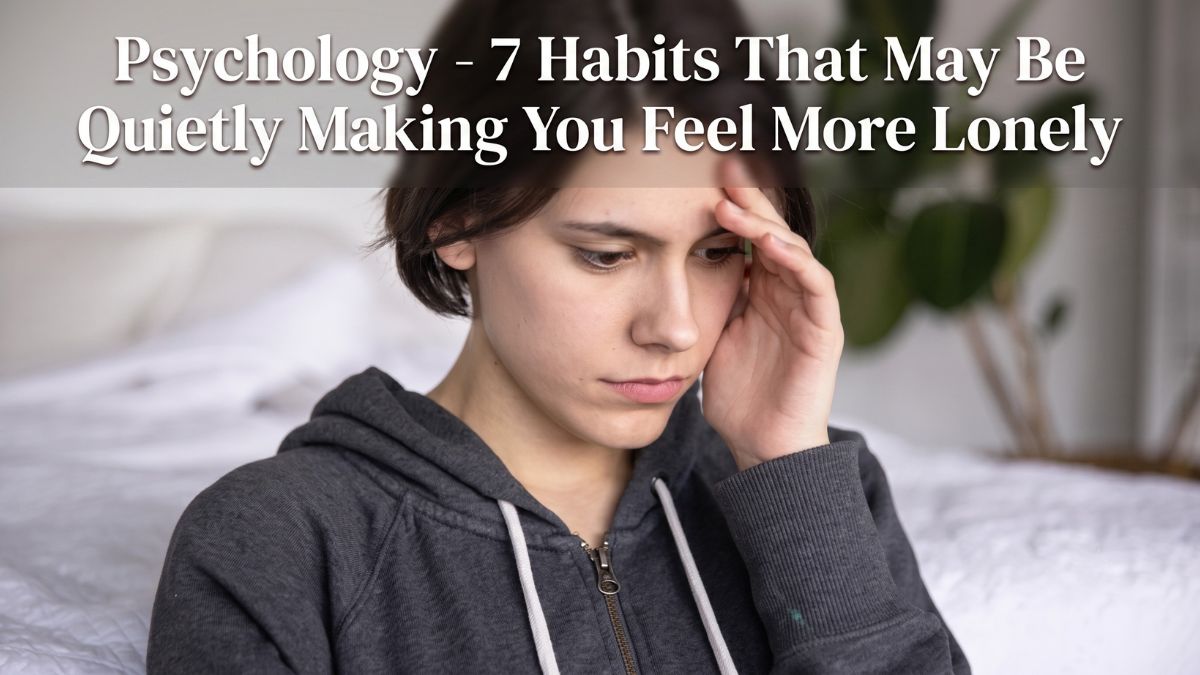
Being alone is not necessarily a problem. Some people enjoy solitude, prefer a small social circle, or simply need time away from others. But there is a difference between choosing to spend time alone and gradually becoming isolated because certain habits make relationships harder to build or maintain.
Psychology research suggests that loneliness can be connected to how people interpret social situations, respond to rejection, handle emotional closeness, and react when relationships become difficult. Recognizing these patterns does not mean someone is destined to remain lonely. In many cases, awareness can be the first step toward changing them.
Rejection
People who regularly expect rejection may protect themselves before anyone has actually rejected them. They might avoid social situations, hesitate to contact others, or remain emotionally guarded because they assume that the interaction will eventually end badly.
A meta-analysis of 75 studies titled “Associations between rejection sensitivity and mental health outcomes” found a moderate association between rejection sensitivity and loneliness. When a person consistently interprets social situations through the possibility of rejection, they may miss opportunities for positive interactions.
This can create a difficult pattern. Expecting rejection may encourage someone to withdraw, and withdrawing can reduce the number of opportunities they have to experience acceptance and build relationships.
Closeness
Some people are comfortable being independent but find emotional closeness difficult. They may prefer handling problems alone and feel uneasy about relying on another person.
Research on adult attachment has examined how avoidant attachment patterns can affect relationship functioning and wellbeing. Keeping emotional distance may initially feel protective, but it can also make it harder for relationships to become more trusting and meaningful.
Emotional closeness usually develops gradually. A person does not need to share everything immediately, but allowing some appropriate vulnerability can give others an opportunity to understand them more deeply.
Withdrawal
When a relationship becomes uncomfortable, withdrawing can seem easier than discussing the problem. Someone may stop responding to messages, avoid conversations, or distance themselves rather than address a disagreement.
However, relationships often involve misunderstandings and conflict. Not every difficult interaction means that a relationship has to end. In some situations, communication can provide an opportunity to clarify what happened and repair trust.
Research has identified associations between perceived rejection, withdrawal, and loneliness. Repeatedly leaving relationships when difficulties arise may therefore reduce opportunities to maintain and strengthen social connections.
Openness
Keeping conversations entirely superficial can make it difficult to develop genuine closeness. Casual conversation is a normal part of social interaction, but stronger relationships generally involve some degree of trust and personal disclosure.
Sharing thoughts, experiences, concerns, or feelings can help people understand each other. This does not mean disclosing personal information indiscriminately. Healthy openness is usually gradual and depends on the level of trust within the relationship.
For someone who rarely opens up, even small steps can make conversations more personal. Asking for another person’s perspective or sharing a modest personal experience can create opportunities for deeper interaction.
Negativity
Social situations are often ambiguous. A delayed reply could mean someone is busy, while a cancelled plan could result from circumstances that have nothing to do with the relationship.
People who are particularly sensitive to rejection may be more likely to interpret uncertain situations negatively. This interpretation can influence their behavior. They might become distant, stop initiating conversations, or assume the other person is no longer interested.
That response can sometimes create additional distance. Before reaching a negative conclusion, considering several possible explanations may help prevent an uncertain situation from being treated as definite evidence of rejection.
Intimacy
Wanting companionship while also feeling uncomfortable with emotional closeness can create a complicated pattern. A person may want friendships or a romantic relationship but become anxious or withdrawn when someone gets closer.
Research on adult attachment has examined this tension through attachment anxiety and attachment avoidance. A 2026 meta-analysis of 76 studies involving more than 40,000 participants, titled “The Different Associations of Adult Attachment Anxiety and Adult Attachment Avoidance on Loneliness,” found that both attachment anxiety and attachment avoidance were significantly associated with loneliness.
This suggests that loneliness is not always simply a matter of wanting more social contact. Some people may want close relationships while finding aspects of intimacy difficult to manage.
Givingup
After repeated disappointment, people may stop making the first move. They might decline invitations, stop contacting friends, or assume that new relationships will eventually end in disappointment.
This reaction can be understandable after difficult experiences. However, reducing social efforts also reduces the number of opportunities to meet people and develop relationships.
A disappointing friendship or unsuccessful interaction does not necessarily predict what will happen in future relationships. Maintaining reasonable social efforts, while also learning from past experiences, can leave more room for positive connections.
These habits should not be treated as diagnoses, and having one of them does not mean a person will inevitably become lonely. Loneliness can be influenced by many factors, including circumstances, mental health, relationships, and major life changes.
Still, noticing patterns such as expecting rejection, avoiding vulnerability, withdrawing during conflict, assuming negative intentions, or giving up after disappointment may provide useful insight. In some cases, changing a small response to a familiar social situation can gradually create more opportunities for connection.
FAQs
Can habits contribute to loneliness?
Yes, some habits can make meaningful connections more difficult.
Is being alone always unhealthy?
No, chosen solitude can be healthy and enjoyable.
Why can intimacy feel uncomfortable?

Past experiences or attachment patterns can make closeness difficult.
Can these habits be changed?
Yes, awareness and different responses can gradually change patterns.
Does rejection sensitivity cause loneliness?
It is associated with loneliness but does not guarantee it.