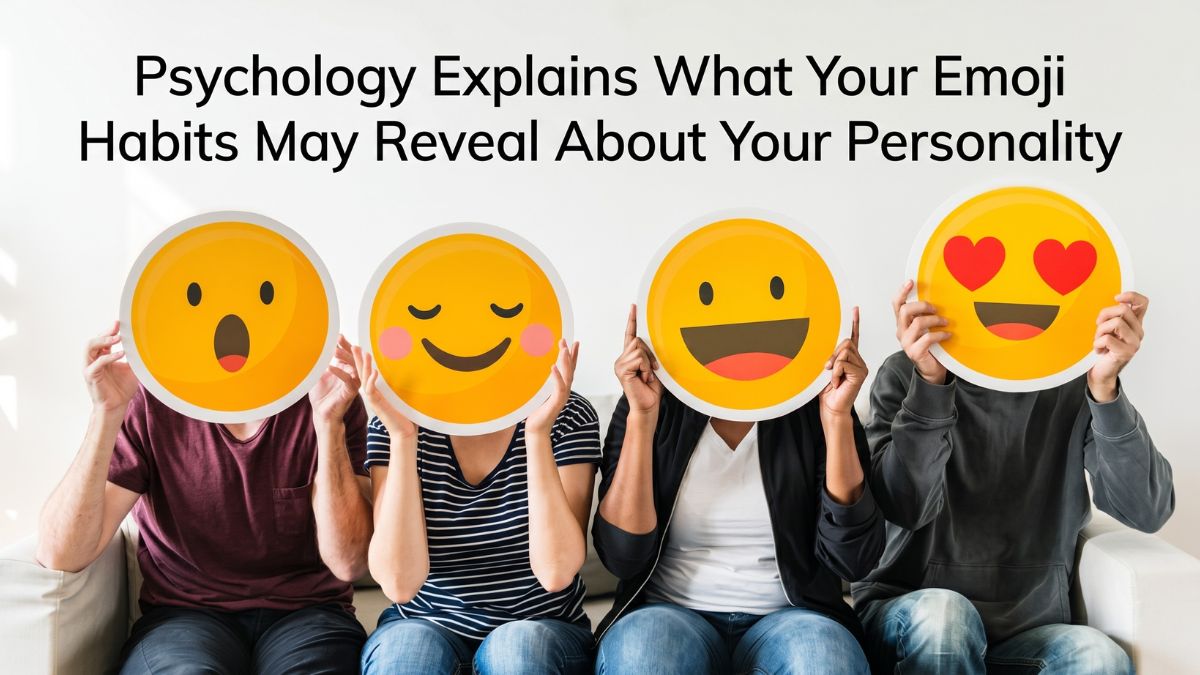
Emojis have quietly changed the way people communicate. A smile, heart, wink, or laughing face can add emotional meaning to a sentence that might otherwise seem flat or unclear. But why do some people use emojis in almost every message while others rarely use them?
Psychology research suggests that emoji habits can be connected with emotional expression, relationship-building, and social behavior. The symbols can influence how warm, responsive, or approachable a person appears in digital conversations. However, emoji use should be viewed as one clue about communication style rather than a reliable test of personality.
Signals
Text messages lack many of the cues people normally rely on during face-to-face conversations. There is no voice tone, facial expression, gesture, or immediate reaction to help explain what someone means.
Emojis can partly fill that gap. Research by Isabelle Boutet, Megan LeBlanc, Justin A. Chamberland, and Charles A. Collin found that emojis can influence emotional interpretation and perceptions of the sender. Positive emojis, for example, may make a person appear warmer, while emojis that support the meaning of the words can make a message easier to understand.
An emoji can therefore work like a small piece of digital body language. The words communicate the basic message, while the emoji can provide an additional indication of how the message is intended to feel.
Personality
Researchers have also examined whether emoji habits are associated with personality traits.
A 2025 study by Janine Carroll involving 222 participants examined relationships between emoji use, personality, prosocial behavior, and mental health. The research found an association between agreeableness and emoji frequency, while prosocial behavior was connected with several aspects of emoji use and preferences for positive emojis.
Another study by Renji Sun and colleagues, involving 312 participants, found connections between emoji and sticker habits and traits including shyness, neuroticism, extraversion, and agreeableness.
The research also indicated that people can change their emoji habits depending on who they are communicating with. Someone may use emojis frequently in private conversations but use them less often in a group or more formal setting.
That suggests emoji behavior may reflect social awareness and communication habits as well as underlying personality characteristics.
Warmth
An emoji can also make a digital conversation feel more personal.
Monica A. Riordan’s research examined emojis as tools for “emotion work” and found that they can communicate positive feelings and potentially contribute to maintaining social relationships.
Consider the difference between “Good luck tomorrow” and “Good luck tomorrow.” The words are almost identical, but the emoji adds a small emotional cue that may make the message seem more encouraging.
More recent research by Eun Huh found that messages containing emojis could be perceived as more responsive than text-only messages. In a study involving 260 participants, perceived responsiveness was associated with greater feelings of closeness and relationship satisfaction.
In this context, an emoji can function as a simple social signal. It may communicate that the sender understands the other person’s message, shares their emotion, or is actively engaged in the conversation.
Context
The meaning of an emoji depends heavily on context.
A heart sent by a romantic partner may have a different meaning from a heart sent by a close friend. Similarly, a laughing emoji in a family group chat may serve a different purpose from one used in a professional conversation.
Age, culture, relationships, communication experience, and personal preference can all influence emoji habits. The same person may also communicate differently across messaging platforms or with different groups of people.
For that reason, counting someone’s emojis and assigning a personality label can produce an inaccurate picture. Communication is influenced by many factors, and emoji use is only one part of it.
Limits
Research on emojis also shows why caution is necessary when interpreting these habits.
A 2024 study published in Frontiers in Psychology by Shelia M. Kennison and colleagues examined emoji use on X. Frequent emoji use was associated with lower openness to experience in two samples, but it was not associated with the other personality traits measured in the study.
This distinction is important. An association between two behaviors or characteristics does not mean one can be used to accurately predict the other.
Someone who rarely uses emojis may simply prefer concise messages or rely more on words to communicate emotion. Someone who uses several emojis in a single message may simply be comfortable with that style of digital communication.
Neither behavior provides enough evidence to determine someone’s personality.
Communication
A more useful way to understand emojis is to consider them part of a person’s communication style.
Frequent emoji users may feel comfortable expressing emotions digitally or may use symbols to make their intended tone clearer. Less frequent users may prefer written explanations or assume that the surrounding conversation provides enough context.
The way a person adjusts emoji use can also be informative. Changing communication style according to the audience may indicate awareness of social expectations rather than a fixed personality characteristic.
Ultimately, emojis are small but meaningful elements of digital communication. They can provide emotional context, make messages appear warmer, and signal engagement with another person. Research has found associations between emoji behavior, certain personality traits, prosocial tendencies, and relationship experiences, but those findings do not make emojis a personality test. To know someone’s communication style, it is more useful to consider their words, behavior, relationships, and context together rather than focusing on the symbols alone.
FAQs
Do emojis reveal personality?
They may offer clues, but they cannot define personality.
Why do people use emojis?
They add emotional context and make digital messages feel warmer.
Can emojis improve relationships?
They may increase perceived responsiveness and feelings of closeness.
Does frequent emoji use mean someone is emotional?
Not necessarily; habits also depend on context and personal preference.
Do emojis replace facial expressions?
They can partly communicate cues missing from text conversations.