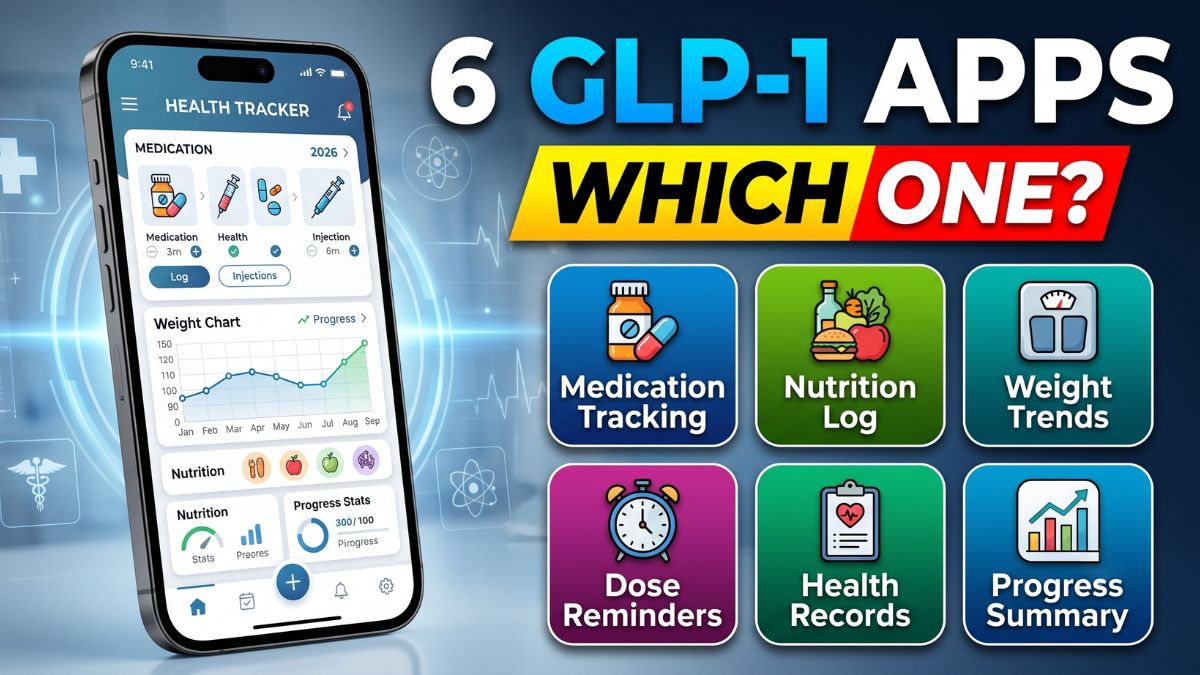
GLP-1 medications can change appetite, eating habits, weight, and daily routines. For many people, keeping track of injections, symptoms, weight, food, and other health information can become useful over time. A tracking app can provide a convenient way to keep these details together instead of relying on memory or scattered notes.
The right app depends on what you want to monitor. Some platforms focus on GLP-1 medication and injection records, while others concentrate on nutrition, weight management, medication reminders, or broader health information. Here are six apps to consider in 2026.
Shotsy
Shotsy is built with GLP-1 users in mind, with features centered on medication and health tracking. Users can record injections and monitor information such as weight, measurements, symptoms, and progress.
Its specialized approach may appeal to people who want a dedicated place to organize their GLP-1 journey. Rather than combining medication tracking with numerous unrelated fitness features, it focuses more directly on information relevant to treatment.
The app can be useful for identifying patterns in your records over time. However, tracking information should be viewed as a record-keeping tool rather than a substitute for guidance from a healthcare professional.
MyFitnessPal
MyFitnessPal is a familiar option for people who want to focus on nutrition while using a GLP-1 medication. The platform provides food logging and can help users monitor calories, protein, carbohydrates, and other nutritional information.
Nutrition can become an important consideration when appetite decreases. Eating smaller portions may make it more difficult for some people to consistently meet their nutritional needs. A food-tracking app can provide a clearer picture of what you are eating.
MyFitnessPal may be particularly convenient if you already use the platform. Its broader fitness features also mean you can continue using it even when your tracking needs change.
Cronometer
Cronometer is geared toward detailed nutrition tracking. Along with calories, it can provide information about nutrients such as protein, fiber, vitamins, and minerals.
That level of detail may be useful for GLP-1 users who want to pay closer attention to the nutritional content of smaller meals. Instead of looking only at how much food you consume, you can examine what that food contributes nutritionally.
The trade-off is that detailed tracking generally requires more time. People looking for a simple daily record may find a more specialized or streamlined app easier to maintain.
Lose It!
Lose It! combines food and weight tracking in a relatively straightforward format. It may suit users who want to monitor changes in eating habits and weight without relying on a medication-specific platform.
For someone taking a GLP-1 medication, recording food intake alongside weight changes can provide useful context. Over several weeks, those records may show how appetite, portion sizes, and weight are changing.
Its main limitation is that it is not designed exclusively for GLP-1 treatment. If injection dates, symptoms, or medication details are important to you, you may need another tracking method as well.
Medisafe
Medisafe approaches the problem from a medication-management perspective. Its reminder features can help users maintain a consistent medication schedule and keep track of doses.
This can be useful for people who have difficulty remembering medication schedules, particularly when they take multiple medicines or have a busy routine. A reminder system can reduce the need to remember every dose manually.
Medisafe is less focused on comprehensive GLP-1 progress tracking, however. Users who also want to record weight, nutrition, measurements, or symptoms may need a separate app for those details.
Guava
Guava takes a broader approach to health tracking. Rather than concentrating only on GLP-1 medications, it can bring together different types of health information, depending on the features and integrations available to the user.
This may be useful for people who want to view medication information alongside other health records, symptoms, activity, or weight-related data.
The broader approach can also mean more information to manage. If you prefer a simple medication or injection log, a specialized app may be easier to use consistently.
Compare
| App | Best For | Main Strength |
|---|---|---|
| Shotsy | GLP-1 users | Medication and progress tracking |
| MyFitnessPal | Nutrition | Food and calorie tracking |
| Cronometer | Detailed nutrition | Nutrient monitoring |
| Lose It! | Weight management | Simple food and weight tracking |
| Medisafe | Medication reminders | Dose scheduling |
| Guava | Overall health | Broader health tracking |
The best GLP-1 tracking app depends largely on what you need to record. Shotsy may be a logical choice for dedicated GLP-1 tracking, while MyFitnessPal and Cronometer are more focused on nutrition. Lose It! combines food and weight tracking, Medisafe emphasizes medication reminders, and Guava takes a broader health-tracking approach.
Before choosing an app, consider which information you are most likely to record consistently. A simple tracker that you use regularly can be more practical than one with extensive features that you rarely open.
Tracking can also make conversations with your healthcare provider more informative by giving you an organized record of changes and symptoms. However, these apps should not be used to change medication doses or treatment plans without professional guidance.
FAQs
What is the best GLP-1 tracking app?
Shotsy is a strong option for dedicated GLP-1 tracking.
Can GLP-1 apps track injection dates?
Yes, several apps can record doses and injection dates.
Can I track nutrition with a GLP-1 app?

Yes, nutrition-focused apps can track calories and nutrients.
Are GLP-1 tracking apps medical tools?
They support tracking but do not replace medical advice.
Should I track side effects?
Tracking symptoms can help you discuss changes with your doctor.