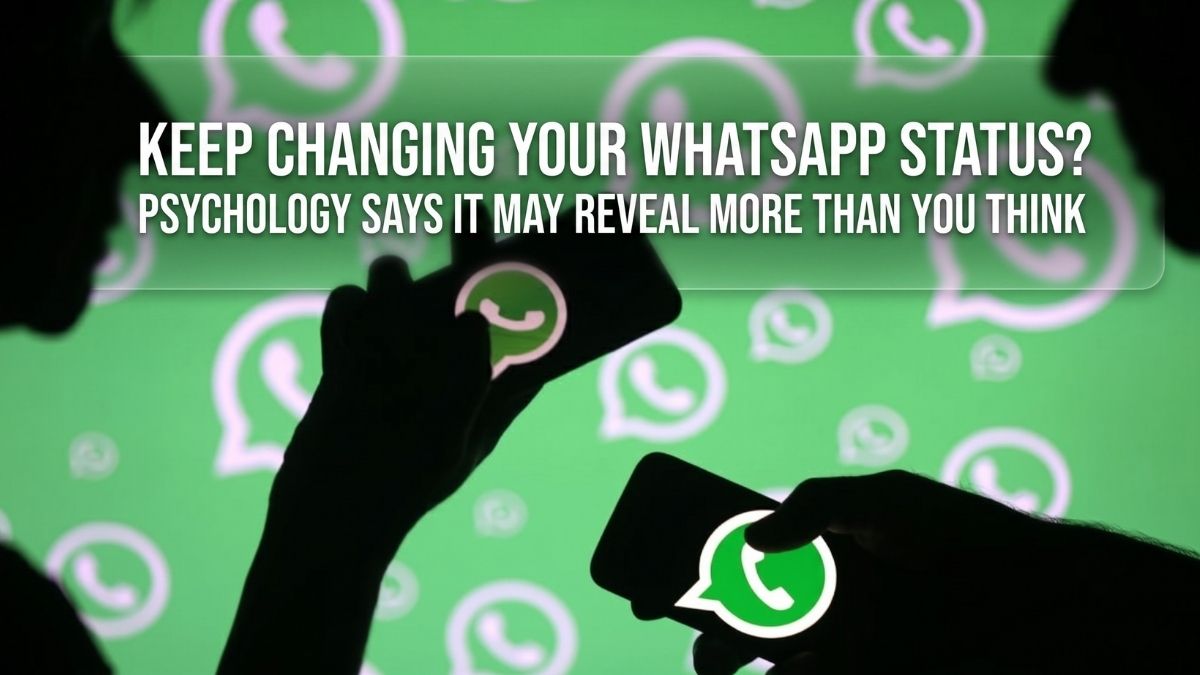
WhatsApp status has quietly become a digital window into everyday life. Some people update it once in a while, while others seem to change their status several times a day. But does frequent posting reveal something about personality? Psychology suggests that the reasons behind the updates matter far more than the number of times someone posts.
Expression
For many users, a WhatsApp status is simply a quick outlet for self-expression. It can be used to share an opinion, celebrate an achievement, post a funny thought, describe a mood or give friends a glimpse into daily life. In this sense, frequently changing a status can be similar to keeping a miniature public diary.
A 2023 study examining why people maintain WhatsApp statuses identified several motivations, including expressing views, sharing life updates, entertainment, inspiration, social relationships, attention seeking and social good. That range is important because it shows there is no single psychological explanation for frequent posting.
Someone who changes their status regularly may simply enjoy communicating in short bursts. For them, WhatsApp is less like a messaging app and more like a personal noticeboard.
Connection
Frequent status updates can also be linked to a desire to stay socially connected. Instead of individually messaging several friends, a person can share one update with everyone in their audience.
Research by Fenne große Deters and Matthias Mehl, published in Social Psychological and Personality Science, examined whether posting more status updates could influence loneliness. Participants who were encouraged to post more often reported feeling less lonely, partly because they felt more connected to their friends.
Interestingly, the benefit did not depend entirely on receiving direct reactions. That means frequent posting is not automatically about collecting likes, replies or compliments. Sometimes, simply sharing something can make a person feel socially present.
Personality
Personality can influence how people behave online, but the relationship is complicated. What someone chooses to share may provide more information than how frequently they post.
Research published in Computers in Human Behavior has linked certain forms of online self-presentation with personality traits. For example, narcissism has been associated with greater self-disclosure and self-promotional content in some studies. People with a stronger need to belong may also share more intimate information.
Other research has found that extraverted people tend to post more about social activities and everyday experiences. But these patterns should be viewed as tendencies rather than rules. A quiet person can be highly active online, while an outgoing person may barely use WhatsApp status.
Attention
Attention can certainly be one reason people post frequently. A status update provides an easy way to put an idea, achievement, photograph or personal moment in front of an audience.
However, calling every frequent poster an attention seeker goes too far. People may want acknowledgment without having a strong need for constant validation. Someone might post a new achievement because they are excited and want loved ones to know, not because they are trying to impress strangers.
The difference lies in the motivation behind the behavior. Status updates provide a simple way for people to communicate with several contacts at once, so frequent use does not by itself explain why someone is posting.
Identity
Social media also gives people control over how they present themselves. A person can decide what to reveal, what to hide and which parts of their life to emphasize.
Recent research on social-media identity expression suggests that users follow different patterns when disclosing information and managing their online identities. Some people are highly open, while others carefully control their audience and the type of information they share.
Frequent WhatsApp status changes can therefore be part of someone’s broader effort to shape their digital identity. They might want to appear funny, successful, thoughtful, social, fashionable or emotionally expressive.
Narcissism
One of the easiest mistakes is assuming that constant status updates equal narcissism. Psychology does not support such a straightforward conclusion.
Research has found connections between narcissism and certain types of social-media behavior, particularly self-promotion and deeper self-disclosure. But social-media activity is driven by numerous factors, including communication, entertainment, belonging and self-expression.
Frequency alone is therefore a weak indicator. A person uploading several statuses about their vacation may simply be excited about the trip. Another person uploading motivational quotes may be expressing their beliefs or trying to encourage others.
Context
The most useful question is not “How often do they change their status?” but “What are they trying to communicate?”
Look at the content, audience and circumstances. Someone posting jokes throughout the day may simply enjoy entertaining people. Someone sharing regular family updates may value connection. Someone repeatedly posting achievements may place greater importance on recognition or self-presentation.
The same behavior can have completely different psychological roots. That is why judging personality from WhatsApp activity alone can be misleading.
Ultimately, frequent WhatsApp status updates can reflect self-expression, social connection, entertainment, identity management or attention seeking. Personality may influence the way someone uses the feature, but posting frequency cannot diagnose a person’s character or psychological traits. The content and motivation behind those updates provide a more useful picture.
FAQs
Why do people change WhatsApp status often?
They may seek expression, connection, entertainment or attention.
Does frequent status posting mean narcissism?
No. Frequent posting alone cannot indicate narcissism.
Can WhatsApp status reveal personality?
It may offer clues, but it cannot define someone’s personality.
Can status updates reduce loneliness?
Some research suggests posting can increase feelings of connection.
What matters more than posting frequency?
The content, context and motivation behind each post matter more.