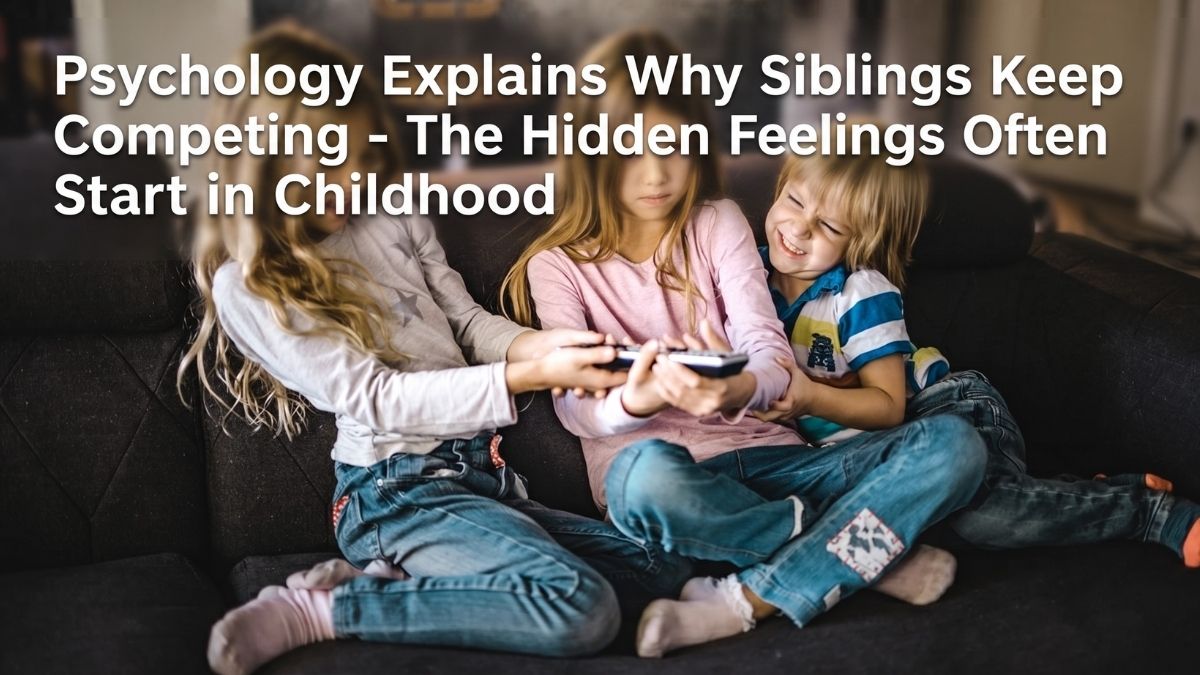
Sibling rivalry can look harmless from the outside. Brothers and sisters may compete over grades, sports, possessions, attention or even who gets the last word. But psychology suggests that constant competition can sometimes reflect emotions that began much earlier in childhood.
A sibling may not simply want to win. They may be looking for reassurance, recognition, fairness or a sense of belonging within the family. Children naturally compare themselves with siblings, particularly when they are trying to understand where they fit within the family.
Over time, these comparisons can influence confidence, behavior and sibling relationships. That does not mean every competitive sibling is struggling emotionally. Instead, persistent rivalry can sometimes provide clues about feelings that children may find difficult to express directly.
Fairness
One possible source of sibling competition is the feeling that a parent values one child more than another.
Children pay close attention to differences in affection, discipline, privileges and expectations. Even when parents believe they are treating their children fairly, children can interpret those differences differently.
A 2023 multilevel meta-analysis by Alexander C. Jensen and colleagues examined parental differential treatment across 66 sources involving 13,628 participants. The researchers found that differences in how parents treated siblings were associated with less positive sibling relationships and poorer adjustment.
Importantly, children do not necessarily need identical treatment. They often need to understand why treatment differs and feel that the overall approach is fair. If a child believes a sibling receives more praise or fewer restrictions without a clear reason, competition can become a way of seeking recognition.
Comparison
Siblings are natural comparison points. They live in the same household, often attend similar schools and may share parents, relatives and social environments.
A child might notice that one sibling gets better grades, performs better in sports or receives more attention. Such observations are normal, but repeated comparisons can become significant when children begin using a sibling’s achievements to evaluate their own worth.
Research by Mark E. Feinberg, Jenae M. Neiderhiser, Sam Simmens, David Reiss and E. Mavis Hetherington examined sibling comparisons in 516 two-child families. Their findings indicated that factors including self-esteem and emotionality influenced how adolescents responded to differences in parental treatment.
This helps explain why siblings can react very differently to the same household environment. One child may see competition as motivation, while another may experience the same situation as a threat to their confidence.
Jealousy
Jealousy is another emotion that can sit underneath sibling competition.
It is easy to assume that a jealous child simply wants whatever their brother or sister has. Sometimes, however, the deeper issue may be attention. The child may be wondering whether they are still important to their parent.
Research by psychologist Amy M. Kolak examined sibling jealousy during early childhood. The study found that older siblings’ jealousy reactions during interactions involving their father were associated with greater sibling conflict later.
In that context, rivalry can function as an indirect form of communication. A child may not have the words to say, “I want reassurance that I matter too.” Instead, they may compete for praise, achievements, privileges or parental attention.
Approval
Parental approval can play an important role in how sibling relationships develop.
When children learn that achievement brings affection, praise or recognition, they may begin viewing siblings as competitors for those rewards. A good grade, sporting achievement or successful performance can then become more than an individual accomplishment. It can become a way of establishing their position within the family.
Research by Alexander C. Jensen, Susan M. McHale and Amanda M. Pond followed 385 families over three years. The researchers found that parents’ comparisons between their children could predict differences in parent-child conflict and later youth problem behavior, particularly among siblings who were close in age.
The pattern can become circular. One sibling competes, another responds, and both become increasingly aware of what the other is receiving.
Patterns
Sibling rivalry does not always develop independently of parenting. Family dynamics can reinforce competition over time.
More recent research by Sarah Teresa Steffgen, Nantje Otterpohl and Avi Assor found that parental conditional regard could contribute to sibling competition and perceptions of favoritism among teenagers.
Conditional regard refers broadly to situations in which children perceive parental affection or approval as dependent on meeting particular expectations. If children believe they must outperform a sibling to receive approval, rivalry can become more persistent.
This does not mean parents deliberately create unhealthy competition. Family life is complicated, and differences in age, personality, needs and circumstances naturally affect how parents respond to individual children.
Security
Underneath repeated competition, some children may be looking for emotional security.
A child who repeatedly asks whether they are better than a sibling may actually be trying to establish where they stand. Another who becomes upset whenever a brother or sister receives praise may be seeking reassurance that their own place in the family has not changed.
These feelings can remain relevant into adolescence and adulthood. The form of the rivalry may change, but the underlying comparison can continue through education, careers, relationships, finances or social status.
That does not mean adult siblings who compete are necessarily carrying unresolved childhood problems. Competition can also be part of ordinary personality differences and family interaction.
Connection
Knowing the emotion behind rivalry can change how families respond to it.
If a child is constantly competing for attention, simply telling them to stop may not address the reason for the behavior. Providing individual attention, explaining differences in treatment and avoiding unnecessary comparisons may be more constructive.
Some sibling competition is normal. It can even encourage children to develop skills, set goals and learn how to handle both winning and losing. The concern is more relevant when competition becomes persistent, hostile or damaging to the relationship.
Psychology suggests that siblings who constantly compete may sometimes be responding to feelings that are less visible than the rivalry itself. Recognition, fairness, parental attention, confidence and emotional security can all influence how children understand their place within a family. Looking beyond who is winning may therefore reveal what each sibling is actually trying to communicate.
FAQs
Why do siblings compete so much?
They may seek attention, recognition, fairness or reassurance.
Can parental favoritism cause sibling rivalry?
Perceived differences in treatment can contribute to sibling conflict.
Is sibling jealousy normal?
Some jealousy is normal, especially during childhood.
Can siblings have different reactions?
Yes. Personality and emotional traits can shape their responses.
How can parents reduce sibling competition?
Fair treatment, reassurance and avoiding unnecessary comparisons may help.