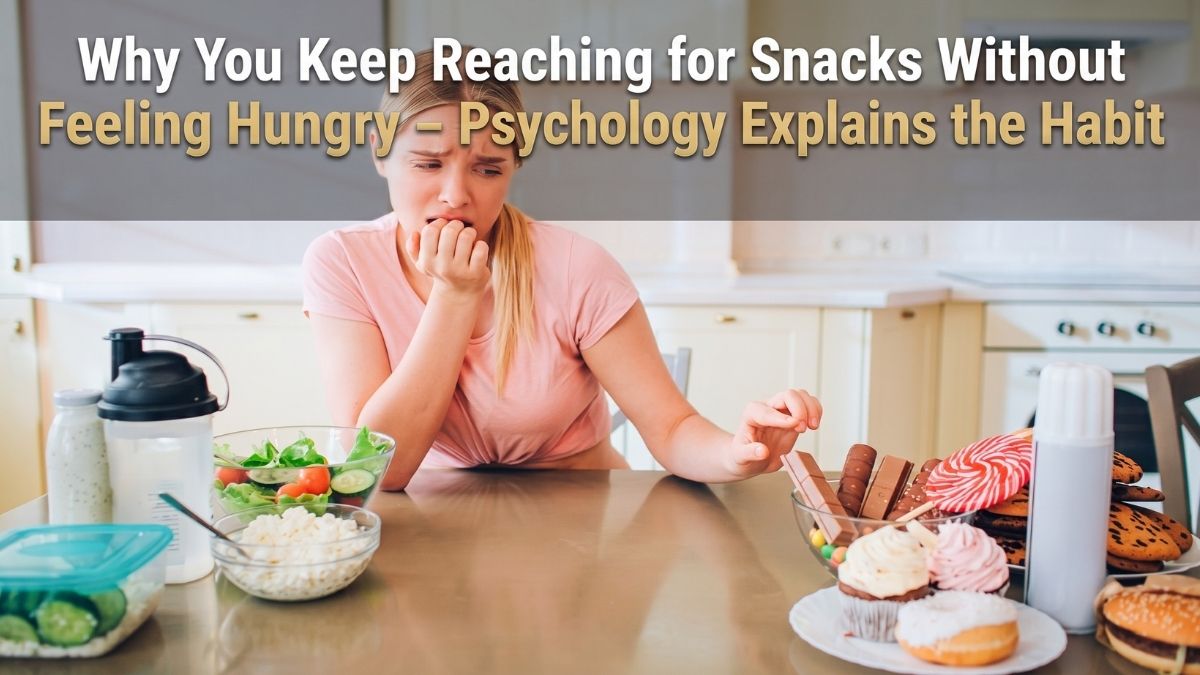
You sit down to work, watch television or talk with friends, and there is a bowl of cookies, chips or nuts within reach. You take one almost automatically. A few minutes later, you reach for another. Eventually, you notice that much of the bowl is gone, even though you were not especially hungry when you started.
Psychology suggests that this behavior is not necessarily a matter of weak willpower. Eating can be influenced by environmental cues, attention, proximity, food visibility and learned habits. When food is repeatedly available in a familiar setting, the brain can begin associating that environment with eating, sometimes before you consciously decide that you want a snack.
Cues
Hunger is only one factor that influences eating. The sight, smell and availability of food can also act as external cues.
A bowl of snacks placed on a table is therefore not psychologically neutral. Every time you notice it, your surroundings provide another reminder that food is available. If the same pattern happens repeatedly, simply seeing the food can become associated with reaching for it.
This helps explain why someone may eat even when physical hunger is not particularly strong. The cue can appear before the conscious decision.
Proximity
Distance can also influence behavior. Research published in the International Journal of Obesity examined how the visibility and proximity of an office candy dish affected consumption.
Other field research in a Google workplace found that employees’ likelihood of taking a snack changed depending on the distance between beverage and snack stations. The findings illustrate a broader principle known as choice architecture, in which relatively small environmental changes can influence behavior.
A snack beside your laptop requires almost no effort to obtain. A snack stored in another room requires an additional action and creates an opportunity to reconsider.
That difference may seem minor, but repeated small decisions can add up.
Automation
Eating can sometimes begin before a person has consciously thought through the decision.
Research on food accessibility and distance suggests that readily available food can activate eating-related mental representations more quickly than food that is farther away. When something edible is visible and easy to reach, the brain may process it as an immediate behavioral option.
This can produce the familiar reaction, “I wasn’t even thinking about eating.”
The person may not have made a deliberate plan to snack. Instead, an environmental cue may have prompted a well-established response. This reflects the broader distinction between automatic and controlled behavior.
Habits
Repeated behavior can gradually become associated with particular situations.
A simple habit sequence might look like this:
Seeing the snack → reaching for it → eating → experiencing satisfaction.
When the same sequence occurs repeatedly, the surrounding context can become part of the learned pattern. A desk, sofa, television program or evening routine may eventually signal that it is time to eat.
This does not mean the person has lost the ability to choose. It means the behavior may require less conscious thought because the context has become familiar.
The reward provided by highly palatable foods can also strengthen the association, making the behavior easier to repeat.
Awareness
Another important factor is knowing how much you have already eaten. Visible evidence of consumption can sometimes help people monitor their intake.
In one study involving people eating chicken wings at a sports bar, participants whose discarded bones remained visible ate fewer wings than those whose leftovers were repeatedly removed. The researchers suggested that the visible remains provided a useful environmental reminder of previous consumption.
A similar principle can apply to snacks. Eating directly from a large package makes it difficult to see how much has disappeared. Putting a smaller portion on a plate creates a clearer visual boundary.
The physical environment can therefore influence not only whether eating begins, but also whether a person notices the amount consumed.
Distraction
Mindless eating frequently happens while attention is occupied elsewhere. You may snack while watching a movie, scrolling through your phone, working at a computer or playing a game.
When attention is directed toward another activity, eating can become background behavior. You may pay less attention to the amount consumed, the pace of eating or your level of satisfaction.
Research into automatic eating has shown that environmental and social factors can influence consumption without people being fully aware of their effects.
This does not mean distracted eating always leads to overeating. However, reduced attention can make it harder to notice the transition from “I wanted a snack” to “I have been eating continuously.”
Visibility
The effect is not limited to foods such as chips, cookies or candy. Visibility and accessibility can influence interactions with different types of food.
Research reviewing visual food cues has found that making food more visible and accessible can affect consumption. In some settings, placing fruit in open containers and within easy reach increased fruit consumption.
This suggests that the underlying principle is broader than the idea that certain foods are simply too tempting. People tend to interact more readily with things that are visible, accessible and repeatedly presented as available choices.
Changing what is easiest to see can therefore change what is easiest to choose.
Environment
The habit of repeatedly reaching for snacks may result from several factors working together. Food cues, proximity, distraction, learned associations and reward can all contribute to automatic eating.
This is why changing the environment can sometimes be more practical than relying entirely on willpower. Moving snacks out of immediate view, storing them farther away or preparing a defined portion can introduce a small pause between seeing food and eating it.
That pause can give deliberate decision-making a chance to intervene.
Ultimately, repeatedly reaching for food without consciously planning to eat does not automatically indicate excessive hunger or poor self-control. Sometimes the environment has become part of the habit. When food is visible, convenient and associated with a familiar routine, the brain may respond almost automatically. Recognizing those cues can be a useful first step toward making eating decisions more deliberate.
FAQs
Why do I snack when I am not hungry?
Environmental cues and habits can trigger eating without strong hunger.
Does seeing food make you want to eat?
Yes. Food visibility can act as a cue that encourages eating.
Can food proximity affect snacking?
Yes. Easily accessible food can make eating more automatic.
Can distractions cause mindless eating?
They can reduce attention to how much and how quickly you eat.
Can changing your environment help?
Yes. Hiding or moving snacks can create a pause before eating.