
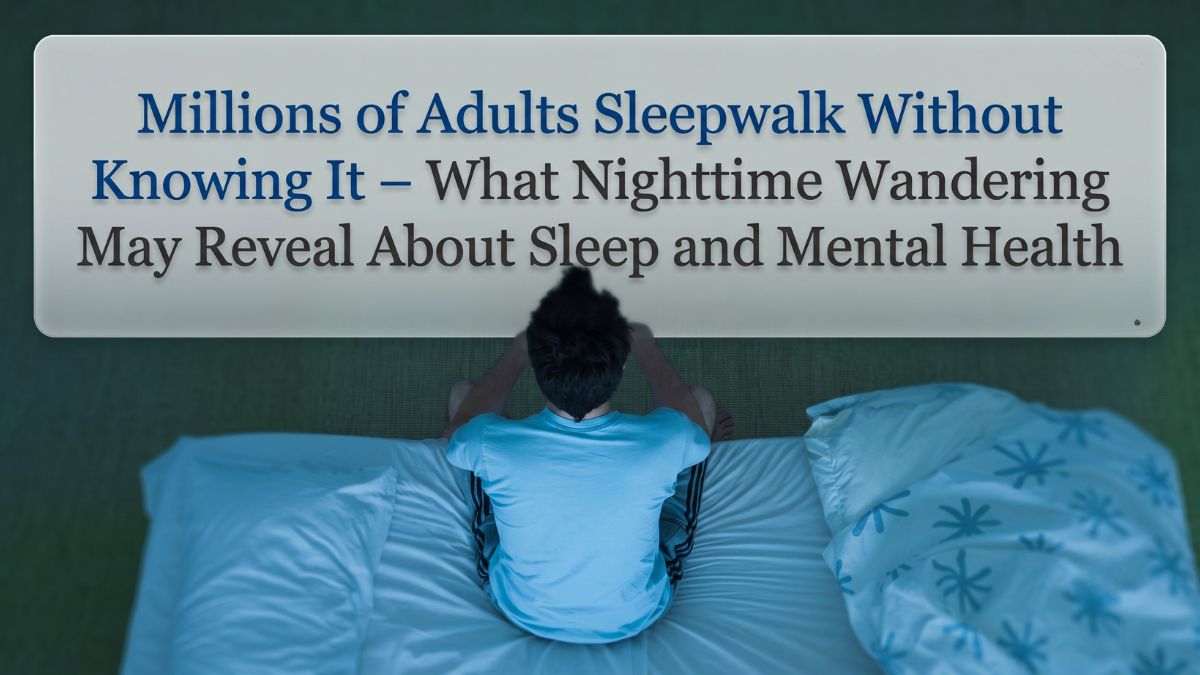
Millions of adults may experience sleepwalking, a condition that can blur the boundary between sleep and wakefulness. Although it is often associated with childhood, research suggests that adult sleepwalking is more common than many people realize. Episodes can range from sitting up in bed to walking around the home without remembering what happened the next morning.
But why does sleepwalking occur, and when could repeated episodes point to an underlying sleep or health issue?
Hidden Causes
Sleepwalking, medically known as somnambulism, occurs when a person gets out of bed or performs other behaviors while remaining partly asleep. The brain does not always move directly from sleep to full wakefulness. Instead, some areas can become active while others remain in a sleep state.
This partial transition can allow a person to walk, talk, open doors or perform familiar actions without normal awareness of what they are doing.
A large study of American adults published in Neurology found that nearly 4% of adults had experienced sleepwalking during the previous year. Based on the study’s 2011 survey, that represented roughly 8.5 million people.
The research also found that about three in 10 adults reported having sleepwalked at least once during their lifetime. Many participants said their sleepwalking had continued for several years, with some reporting that it had begun during childhood.
Brain Activity
Sleepwalking illustrates that sleep is not simply an on-or-off state. Different parts of the brain can show different levels of activity during an episode.
Sleepwalking generally occurs during deep non-REM sleep. During an incomplete transition toward wakefulness, areas involved in movement may become active while regions responsible for full awareness and judgment remain less active.
This can explain why a sleepwalker may appear awake while still being largely asleep. Their eyes may be open and they may move around, but their ability to understand their surroundings can be limited.
People who sleepwalk often have little or no memory of the event afterward. The lack of recall is one reason episodes can be surprising when another person describes what happened.
Mental Health
Adult sleepwalking can occur alongside certain psychiatric and physiological conditions. Research has reported associations between recurrent sleepwalking and conditions such as major depressive disorder and obsessive-compulsive disorder.
However, an association does not mean that one condition directly causes the other. Sleep disruption, stress, medication use and other factors can affect both sleep quality and mental health.
Research has also found an association between sleepwalking and alcohol abuse or dependence. Alcohol can alter normal sleep patterns, potentially contributing to disrupted sleep in some individuals.
For that reason, an isolated episode should not automatically be interpreted as evidence of a mental health disorder. Repeated episodes need to be considered in the broader context of a person’s sleep, health and lifestyle.
Family Links
Family history appears to be another factor. The large adult study found that nearly one-third of people who reported sleepwalking had at least one other sleepwalker in their family.
This pattern suggests that genetics may contribute to a person’s susceptibility to sleepwalking. It does not mean that someone with a family history will necessarily develop the condition.
Other influences can also affect whether episodes occur. Sleep schedules, sleep deprivation, stress and underlying sleep disorders may all play a role.
Sleep Loss
Not getting enough sleep can increase the likelihood of sleepwalking in susceptible people. Sleep deprivation can change the structure and continuity of sleep, potentially making incomplete awakenings more likely.
Irregular sleep schedules, jet lag, illness and periods of increased stress may also disturb normal sleep patterns.
In some adults, recurrent sleepwalking can occur alongside another sleep disorder. Obstructive sleep apnea, for example, can repeatedly interrupt sleep and may contribute to unusual nighttime behaviors.
When episodes become frequent, identifying whether another sleep problem is present can therefore be important.
Staying Safe
Occasional sleepwalking may not require treatment, but safety remains important. A person who is not fully awake may not recognize ordinary hazards around them.
Stairs, windows, balconies, sharp objects and unlocked doors can present risks. Keeping pathways clear and making the sleeping environment safer can reduce the chance of injury.
If someone in the household sleepwalks, it is generally preferable to guide them calmly back toward bed rather than deliberately startling them. A sudden awakening can cause temporary confusion or distress.
Safety measures become particularly important when episodes involve leaving the house or handling potentially dangerous objects.
When to Act
Not every episode of sleepwalking requires medical treatment. However, recurring or dangerous episodes should be discussed with a healthcare professional.
A doctor may consider possible contributors such as sleep apnea, chronic sleep deprivation, medication effects, alcohol use, stress or other sleep disorders.
Keeping a regular sleep schedule and getting sufficient sleep may help reduce episodes for some people. A sleep diary can also provide useful information about when episodes occur and whether they coincide with changes in sleep patterns or lifestyle.
New sleepwalking that begins in adulthood is another reason to seek medical advice, particularly if it occurs frequently, results in injuries or is accompanied by significant daytime sleepiness.
Sleepwalking is a complex sleep behavior in which movement and limited awareness can occur while the brain remains partly asleep. Research suggests that adult sleepwalking is more common than previously assumed and can have links with family history, sleep deprivation, other sleep disorders and certain mental health conditions. An occasional episode may be harmless, but repeated or risky nighttime behavior deserves attention because it can sometimes provide clues about disrupted sleep or another underlying health issue.
FAQs
How common is adult sleepwalking?
About 4% of U.S. adults reported recent sleepwalking.
Can stress cause sleepwalking?
Stress can disrupt sleep and may trigger episodes.
Is sleepwalking linked to mental health?
It can occur alongside some psychiatric conditions.
Can sleep deprivation trigger sleepwalking?
Yes, inadequate sleep may increase the risk.
When should sleepwalking be treated?
Seek help for frequent, dangerous, or new adult episodes.