People who take in stray or abandoned animals often describe the decision in simple terms: they saw an animal in need and wanted to help. But psychology suggests that this response can involve several factors, including empathy, compassion, previous experience with animals and the human tendency to form emotional bonds with vulnerable beings.
For some people, seeing an injured, frightened or abandoned animal creates a strong emotional response. That feeling may lead to practical action, such as providing food, arranging veterinary care, fostering or offering a permanent home.
There is no single personality type behind animal rescue. People adopt strays for different reasons, and an emotional reaction is only one part of the picture. Still, research into empathy, caregiving and human-animal relationships helps explain why some people feel particularly motivated to give an abandoned animal another chance.
Empathy
Empathy allows people to recognise and respond to the distress of others. When the person experiencing that distress is an animal, visible signs of fear, injury or hunger can produce a strong desire to help.
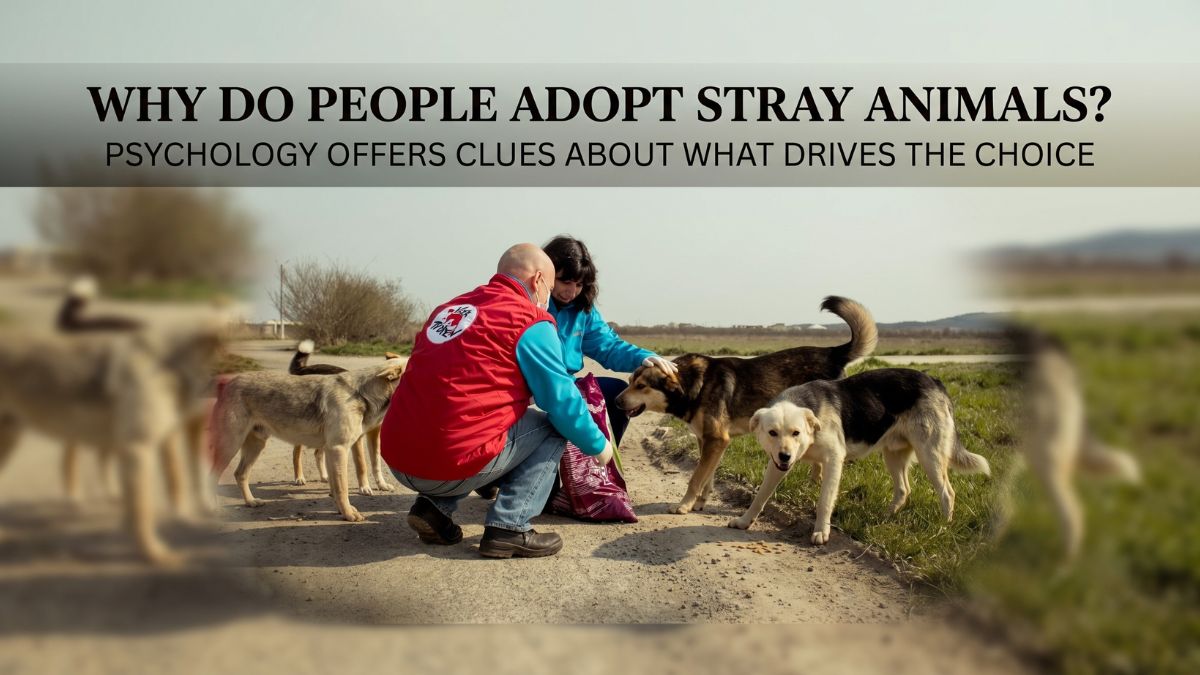
Someone might notice a dog hiding near a road or a cat searching for food and feel unable to simply walk away. Previous experience with pets can make this response stronger because owners may already know how animals behave when they are frightened, unwell or uncomfortable.
That does not mean every person who rescues an animal has unusually high empathy. Motivation varies considerably between individuals. However, empathy and compassion can contribute to the decision to intervene rather than ignore an animal’s situation.
The process can be gradual. A person may first leave food outside, then contact a rescue group, arrange treatment and eventually decide to foster or adopt.
Vulnerability
An abandoned animal can appear particularly vulnerable because it may lack food, shelter, protection and reliable human care.
People sometimes respond strongly to this vulnerability because they naturally tend to protect beings they perceive as dependent or in need of assistance. The animal’s behaviour can reinforce that response. A frightened dog slowly approaching for food or a previously fearful cat beginning to rest nearby can make the developing relationship feel significant.
Some people may also identify emotionally with the idea of being rejected, unsafe or overlooked. This does not mean they have experienced the same circumstances as the animal. Rather, the animal’s situation may activate familiar human emotions surrounding vulnerability and belonging.
As trust develops, the person may stop seeing the animal simply as a stray. It becomes an individual with a recognisable personality, habits and needs.
Attachment
Attachment theory provides one framework for understanding how close relationships can develop between people and animals.
Attachment involves feelings of safety, closeness and emotional connection. Human-animal relationships can develop through repeated interactions, particularly when one individual consistently provides food, protection and care.
A rescue animal may initially be cautious around people. Over time, regular feeding, gentle interaction and a predictable environment can establish trust.
The process works in both directions. The person learns the animal’s behaviour and routines, while the animal gradually learns that its caregiver is a reliable source of safety.
This repeated interaction can turn an initial act of rescue into a lasting relationship.
Altruism
Another useful psychological concept is the empathy-altruism hypothesis, which proposes that empathic concern can motivate people to help others even when they are not seeking a direct material reward.
Animal rescue can fit this pattern in some circumstances. A person may spend money on veterinary treatment, devote time to rehabilitation or change their household routine without expecting anything financial in return.
There can still be personal benefits, such as companionship or satisfaction from helping. That does not necessarily make the original act less compassionate. Human motivations are often mixed rather than belonging neatly to one category.
Someone can genuinely want an animal to be safe while also enjoying the companionship that develops afterward.
Experience
Previous experience with animals may also influence rescue decisions.
Someone who has owned dogs or cats may recognise signs of dehydration, fear, injury or illness more readily than someone without that experience. Familiarity can make a situation easier to interpret and may increase confidence about what practical steps to take.
That awareness can create a sense of responsibility. Once a person recognises that an animal is struggling, ignoring the situation may become psychologically harder.
The response can take different forms. Not everyone who notices an animal in distress can adopt it. Some people contact shelters, arrange temporary care, provide food or help with medical treatment instead.
Adoption is therefore only one possible outcome of concern for an animal’s welfare.
Bonding
Human-animal interaction has also been studied in relation to physiological responses associated with social connection and stress.
Oxytocin, for example, is involved in bonding and caregiving, while cortisol plays a role in the body’s stress response. Research has explored how interactions between people and animals can influence these systems.
However, these effects should not be presented as universal or as proof that adopting an animal automatically improves someone’s mental health. Responses differ between people, and caring for an animal can also introduce responsibilities and sources of stress.
A rescue animal may require veterinary treatment, training, patience and ongoing attention. The emotional reward can be meaningful, but it comes alongside a genuine long-term commitment.
Purpose
Caring for an animal can also introduce structure into everyday life.
Feeding, walking, grooming, cleaning and veterinary appointments create predictable responsibilities. For some people, these routines can provide a sense of purpose and encourage regular activity.
The relationship may also offer companionship. An adopted animal becomes part of the household’s daily rhythm, creating repeated opportunities for interaction.
But this should not be confused with a guaranteed psychological benefit. Animals have individual needs, and responsible adoption requires consideration of whether a person has the time, resources and living situation necessary to provide appropriate care.
Patience
One of the clearest lessons from animal rescue is that trust often develops gradually.
An animal that has experienced abandonment or neglect may not immediately behave like a comfortable household pet. It may hide, avoid touch, react cautiously to unfamiliar sounds or take time to establish a routine.
Consistent care can help, but there is no universal timetable. Some animals adjust quickly, while others need considerably longer.
For the caregiver, this can demonstrate how repeated actions influence trust. Providing food every day, maintaining predictable routines and respecting an animal’s boundaries can gradually change its behaviour.
Compassion
Rescuing a stray ultimately turns an emotional reaction into a practical decision.
Feeling concerned about an animal is one thing. Providing food, arranging medical treatment, contacting a rescue organisation or accepting the responsibilities of adoption requires action.
This distinction is important because compassion is not simply an emotion. In many cases, it becomes meaningful when it influences behaviour.
People who adopt abandoned animals may therefore be responding to a combination of empathy, attachment, experience, responsibility and a desire to provide a safe environment.
Lessons
The behaviour also offers several broader observations about relationships and caregiving.
An animal’s value does not depend on its breed, price or previous ownership. A stray may have an unknown history and still become an important member of a household.
Rescue can also demonstrate resilience. An animal that has experienced difficult circumstances may gradually adapt to a stable environment, although recovery is not always straightforward.
Most importantly, adoption requires patience. Providing a home is only the beginning. Building trust, managing health needs and establishing routines all require sustained effort.
For many people, the appeal of adopting a stray comes from seeing a vulnerable animal as deserving of that effort. Psychology cannot reduce every adoption decision to one motivation, but empathy, caregiving and attachment offer useful explanations for why some people respond strongly when they encounter an animal without a home.
An abandoned animal may initially need a person to provide food or shelter, but the relationship can eventually become reciprocal in an emotional sense. The caregiver provides security and care, while the animal may become a source of companionship, routine and connection. That combination helps explain why rescuing a stray can begin as a practical act of compassion and develop into a lasting bond.
FAQs
Why do people adopt stray animals?
Empathy, compassion, experience and attachment can influence adoption.
Does adopting strays mean someone is highly empathetic?
Not always. People adopt animals for many different reasons.
Can rescued animals form strong bonds?
Yes. Consistent care can help animals develop trust and attachment.
What psychology explains animal rescue?
Attachment and empathy-based theories offer useful explanations.
Does adopting an animal provide purpose?
Daily care can give some people structure and a sense of responsibility.