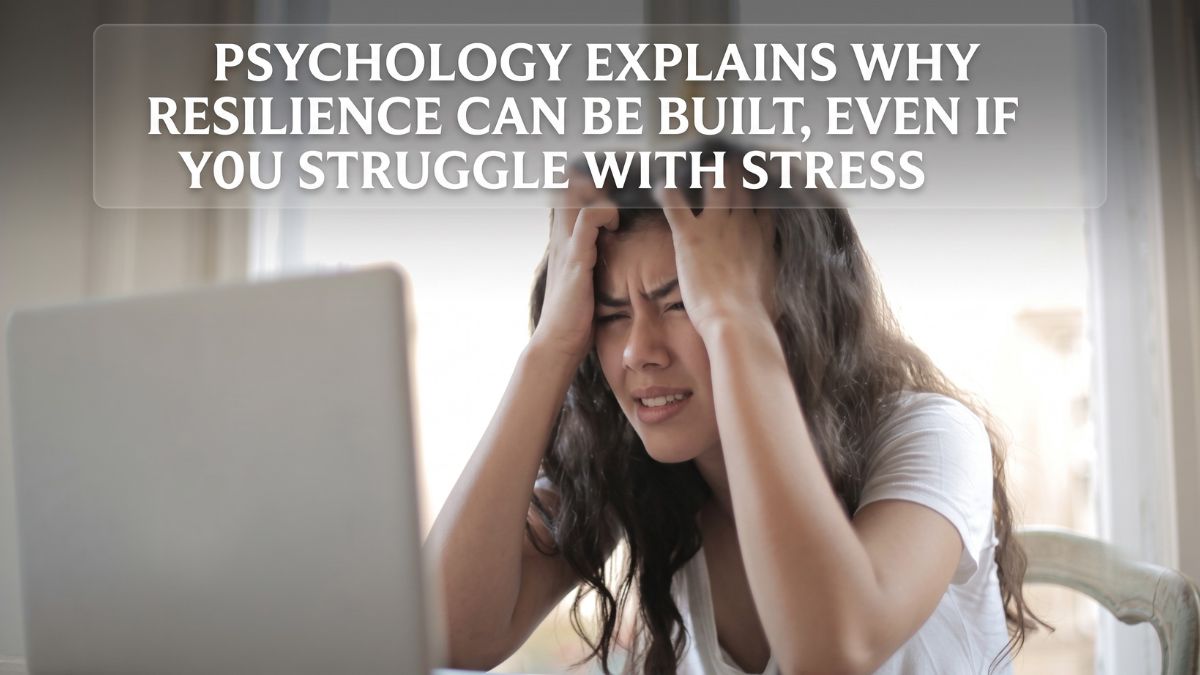
Imagine sitting in bumper-to-bumper traffic when you are already late for an important meeting. Your heart starts racing, your hands tighten around the steering wheel, and frustration quickly takes over. Yet later that same day, you face a difficult disagreement with someone you love and manage to stay calm and patient.
Why can the same person handle one stressful situation well but struggle with another?
The answer may be partly explained by how psychologists understand resilience. Rather than being a fixed personality trait that some people are simply born with, resilience can be understood as a set of skills that develops through experience, habits, support and repeated practice.
Dr. Rachel Goldsmith Turow, a clinical psychologist, research scientist and educator who focuses on mindfulness and stress, has described resilience as the ability to manage stress effectively. Writing for Live Science in 2024, Turow emphasized that resilience is not simply an inborn quality or a matter of choosing to have a positive attitude. Instead, it involves skills that people can intentionally develop.
Resilience
Resilience is often described as the ability to recover or adapt when life becomes difficult. But that definition can sometimes create the impression that resilient people simply remain calm regardless of what happens.
Real life is more complicated.
A resilient person can still feel anxious, angry, disappointed or overwhelmed. The difference may lie in how effectively they respond to those emotions and whether they can regain their balance after a stressful event.
Resilience is therefore better viewed as a dynamic capacity rather than a permanent personality label. It can vary depending on the situation, the person’s health, available support and the type of stress they are experiencing.
Someone might cope effectively with a family crisis but become unusually frustrated by workplace pressure. Another person may handle financial uncertainty well but struggle with loneliness.
Practice
Building resilience has similarities to developing physical fitness.
Going to the gym once does not suddenly make someone physically strong. Strength develops through consistent training and recovery. Mental resilience can work in a similar way.
Simply deciding to become more resilient is unlikely to be enough. People generally need to practice behaviors that improve their ability to manage stress.
These practices can include learning to recognize emotional reactions, developing healthier responses to difficult situations, maintaining routines that support physical health and building relationships that provide emotional support.
Over time, repeated behaviors can make it easier to respond constructively when stressful circumstances arise.
Habits
Everyday habits can influence how well people manage stress.
Regular physical activity, sufficient sleep and activities that provide enjoyment or meaning can support overall psychological well-being. Hobbies can also provide a useful break from ongoing demands, giving the mind an opportunity to shift attention away from stress.
These habits may seem ordinary, but resilience does not necessarily come from dramatic acts of strength. Often, it develops through relatively small behaviors repeated consistently.
Sleep is a useful example. When someone is chronically sleep-deprived, ordinary problems can feel more difficult to manage. Maintaining adequate sleep does not eliminate stress, but it can provide a stronger foundation for dealing with it.
Support
Resilience is not built entirely through individual effort.
A person’s environment can make a substantial difference in how easily they can cope with adversity. Factors such as income, access to education, stable housing, healthcare and supportive workplaces can influence the resources available to someone during difficult periods.
Supportive relationships are also important. Friends, family members, colleagues and other trusted people can provide practical assistance, perspective and emotional support when circumstances become challenging.
This is why telling someone to simply “be stronger” can overlook the conditions surrounding their stress. Coping capacity is influenced not only by personal habits but also by the resources and environments available to an individual.
Regulation
Another important part of resilience involves emotional regulation.
Stress can trigger strong physical and emotional reactions. Learning to notice those reactions without immediately acting on them can create space for a more considered response.
For example, someone receiving an upsetting message might immediately want to respond angrily. Emotional regulation does not require pretending the message was acceptable or suppressing the emotion. Instead, it can involve recognizing the anger, allowing the initial reaction to settle and then deciding how to respond.
Meditation and mindfulness practices are sometimes used to develop this kind of awareness. For some people, spirituality or religious practice may also provide a framework for managing stress and finding meaning during difficult experiences.
Compassion
The way people speak to themselves can also influence how they respond to setbacks.
Self-criticism can turn an already difficult situation into a second source of stress. Someone who makes a mistake may not only have to deal with the original problem but also with thoughts such as “I always fail” or “I should have known better.”
Self-compassion offers a different approach. It involves recognizing difficulty without treating oneself with unnecessary harshness.
This does not mean ignoring mistakes or avoiding responsibility. Instead, it allows a person to acknowledge what went wrong while maintaining a more balanced view of themselves.
Over time, that approach may make it easier to learn from setbacks rather than becoming consumed by them.
Hardship
One common misconception is that difficult experiences automatically make people more resilient.
Hardship can certainly provide opportunities to learn and adapt, but adversity alone is not a guaranteed form of psychological training. Severe or prolonged stress can also exhaust a person’s emotional and physical resources.
What happens after a difficult experience can matter greatly. Support, recovery, healthy coping strategies and opportunities to process what happened can all influence how someone adapts.
In other words, simply going through something difficult does not necessarily make a person stronger. The way they are able to respond, recover and access support can be more important.
Growth
Resilience, then, is not about becoming someone who never gets upset or overwhelmed. It is about expanding the ability to manage difficult experiences and recover in healthy ways.
That ability can be influenced by sleep, exercise, supportive relationships, emotional regulation, self-compassion and the environments in which people live and work. Some of these factors are easier to change than others, but even small improvements can contribute to a stronger foundation for coping with stress.
The next time you lose your patience in traffic or feel overwhelmed by an unexpected problem, it does not necessarily mean you lack resilience. It may simply show that resilience is situation-dependent and still developing. Like physical strength, the capacity to handle stress can change with practice, support and time.
FAQs
Can resilience be learned?
Yes. Resilience can develop through habits, practice and support.
Is resilience an inborn personality trait?
No. Research describes resilience as a developable set of skills.
What helps build resilience?

Sleep, exercise, relationships and emotional regulation can help.
Does hardship automatically build resilience?
No. Support and healthy coping also affect how people adapt.
What role does self-compassion play?
It can reduce harsh self-criticism and support healthier coping.