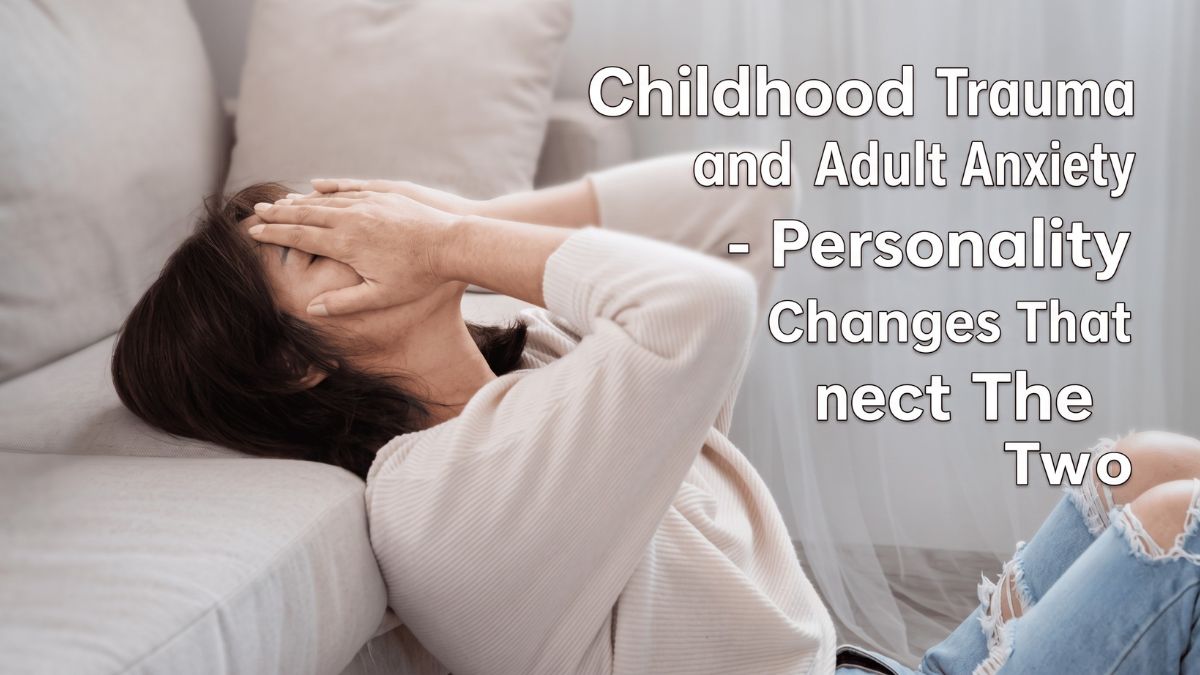
Childhood maltreatment can leave effects that extend well beyond the years in which it occurs. A new study suggests that one important pathway may involve changes in how people understand themselves, regulate emotions and form relationships.
Published in Psychological Reports, the study examined adults entering psychotherapy and found a strong association between childhood maltreatment and anxiety symptoms. Much of that relationship appeared to operate through impairments in personality functioning, particularly difficulties involving self-perception and interpersonal relationships.
The findings do not mean that childhood maltreatment inevitably causes anxiety or that personality functioning alone explains every case. Instead, they offer a possible framework for understanding why early emotional experiences can remain relevant to mental health later in life.
Anxiety
Generalized anxiety disorder involves persistent and excessive worry about everyday situations. The concerns can extend across areas such as health, work, finances and relationships and may be difficult to control.
Childhood maltreatment is already recognised as an important risk factor for later mental health difficulties. It can include physical or emotional abuse, sexual abuse, and emotional or physical neglect.
The researchers, led by clinical psychologist Stephanie Vaccarezza of Pontificia Universidad Católica de Chile, wanted to examine what might connect these early experiences with anxiety among adults receiving mental health care.
Their focus was personality functioning, a concept used in contemporary psychiatric models to describe how effectively a person understands themselves and manages relationships with others.
Functioning
Personality functioning includes two broad areas.
Self-functioning involves a person’s sense of identity, self-esteem, ability to establish meaningful goals, emotional regulation and capacity for self-reflection.
Interpersonal functioning concerns empathy, closeness and the ability to develop relationships that are mutually supportive.
When these abilities are disrupted, people may have difficulty maintaining a stable sense of self or navigating relationships. Such difficulties can contribute to emotional distress and may influence how a person responds to stressful experiences.
The researchers proposed that childhood maltreatment could interfere with the development of these capacities, potentially creating a pathway through which early adversity becomes associated with anxiety in adulthood.
Study
The research involved 335 adults who were beginning individual psychotherapy at four outpatient mental health centres in Santiago, Chile.
Participants completed questionnaires covering their childhood experiences, current personality functioning and anxiety symptoms. The childhood maltreatment assessment examined different forms of abuse and neglect.
The researchers then used statistical models to examine whether personality functioning helped explain the association between childhood maltreatment and adult anxiety.
They also used a statistical resampling procedure involving 1,000 simulated samples to assess the reliability of their mediation estimates.
This approach allowed the researchers to ask a more specific question than whether childhood maltreatment and anxiety are associated. They could investigate whether difficulties in personality functioning statistically accounted for part of that relationship.
Findings
A substantial proportion of participants reported childhood maltreatment. Overall, 64.2% said they had experienced at least one form.
Emotional abuse was the most frequently reported type, affecting about 43% of participants. Some participants reported multiple forms of maltreatment, including a smaller group that experienced all five categories examined.
More than half of the participants met diagnostic criteria for generalized anxiety disorder. Women in the sample had higher odds of anxiety symptoms and were also more likely to report childhood sexual abuse.
When the researchers considered overall childhood maltreatment, higher levels were associated with greater anxiety.
However, the results became more specific when individual forms of maltreatment were examined. Emotional abuse and emotional neglect showed significant total associations with adult anxiety in this analysis. Physical abuse, physical neglect and sexual abuse did not show statistically significant total effects on anxiety scores.
These findings should not be interpreted as suggesting that the other forms of maltreatment are harmless. Rather, they were not significant predictors of anxiety in this particular sample and statistical model.
Mediation
Personality functioning emerged as a major part of the relationship.
The researchers estimated that impairments in overall personality functioning accounted for approximately 73% of the association between childhood maltreatment and adult anxiety.
Both self-functioning and interpersonal functioning contributed to this pattern. However, difficulties involving self-functioning had a somewhat stronger role than interpersonal impairments.
For participants who experienced emotional abuse, problems with self-functioning explained a larger portion of the association with anxiety than interpersonal functioning did.
A similar pattern appeared among participants who reported emotional neglect.
One particularly notable result concerned emotional neglect. Its association with adult anxiety was statistically explained through diminished personality functioning in the study’s model. Emotional abuse, by comparison, retained a direct statistical association with anxiety even after personality functioning was considered, although personality impairments still accounted for more than half of its overall association.
Meaning
The findings offer a possible explanation for why childhood emotional experiences can remain relevant decades later.
Consider a child who repeatedly receives criticism, rejection or little emotional support. Over time, such experiences may influence beliefs about worth, safety and relationships. If those patterns become deeply established, they may affect emotional regulation and responses to uncertainty in adulthood.
The study does not prove that this exact developmental sequence occurs in every person. Its findings are statistical associations from adults assessed at the beginning of psychotherapy.
Still, the results suggest that focusing only on immediate anxiety symptoms may not address every difficulty experienced by people with a history of childhood maltreatment.
Limitations
The study has several limitations.
Participants had to recall experiences from childhood, so the findings may be affected by memory or differences in how people interpret past events.
The sample also consisted of adults seeking psychotherapy and was drawn primarily from private clinics. Many participants had relatively high levels of education. As a result, the findings may not represent people in other clinical or social settings.
Another limitation is the study’s cross-sectional design. Information was collected at one point in time rather than across several years. Therefore, the researchers could identify associations and statistical mediation, but they could not establish a definitive causal sequence between childhood maltreatment, personality functioning and anxiety.
Long-term studies following people across different stages of development would provide stronger evidence about how these processes unfold.
Treatment
The findings may nevertheless have implications for psychological treatment.
For someone experiencing anxiety after a history of emotional maltreatment, reducing worry and other immediate symptoms may be only part of the therapeutic process.
Treatment may also benefit from addressing deeper difficulties involving self-esteem, identity, emotional regulation and relationships. Strengthening these areas could help patients develop more stable ways of understanding themselves and responding to stressful situations.
This does not mean that personality impairments should be viewed as permanent consequences of childhood experiences. Personality functioning can change, and psychological treatment can address difficulties in self-understanding and relationships.
Overall, the study adds to evidence that the effects of childhood maltreatment are not limited to memories of specific events. Early experiences may also be associated with the development of patterns in how people see themselves and relate to others. Knowing those patterns could help clinicians develop more individualised approaches for adults experiencing anxiety and other long-term effects of childhood adversity.
FAQs
Does childhood maltreatment cause adult anxiety?
It is strongly associated with anxiety, but causation is not proven here.
What is personality functioning?
It describes how people understand themselves and manage relationships.
Which maltreatment showed the strongest link?
Emotional abuse and emotional neglect showed significant associations.
How much did personality functioning explain?
It explained about 73% of the association in the study’s model.
Can therapy address these difficulties?
Therapy can target anxiety, emotional regulation, identity and relationships.