Everyone laughs. The conversation flows easily. You genuinely enjoy yourself.
Yet once you get home, all you want is silence.
You put your phone aside, lie down and hope nobody calls for the rest of the evening.
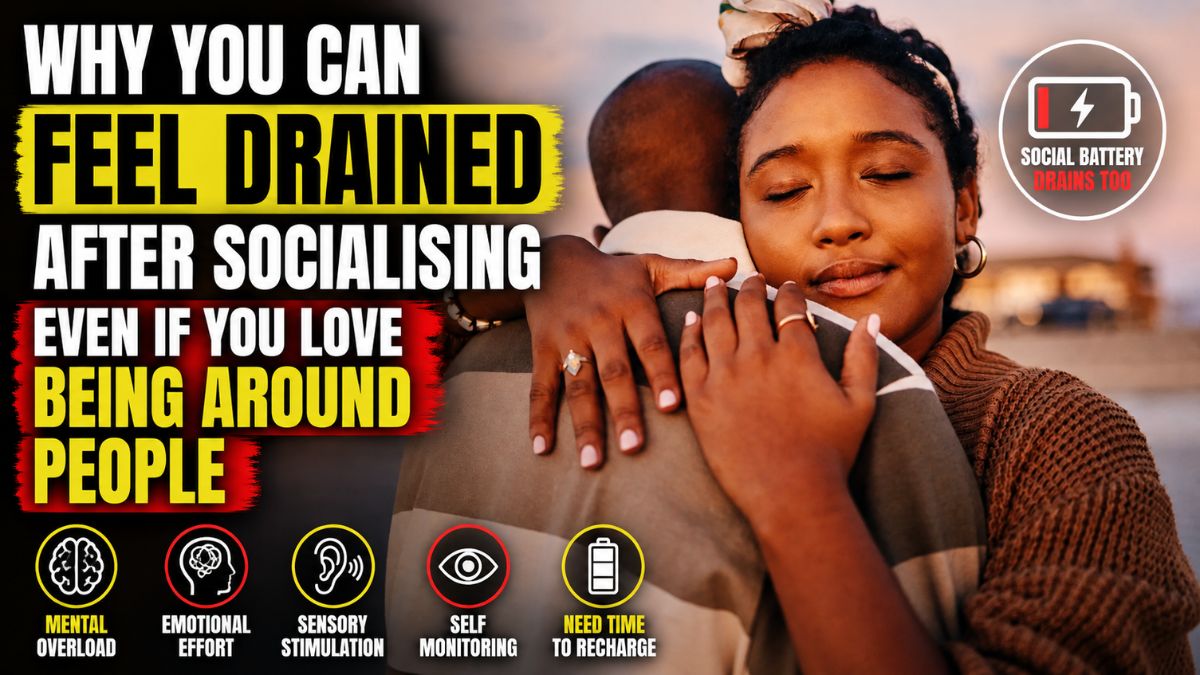
It is tempting to assume that this automatically makes you an introvert. Psychology suggests the explanation can be more complicated. Social exhaustion can be influenced by cognitive load, emotional regulation, sensory stimulation, self-monitoring, personality, stress and the type of social environment.
In other words, enjoying people and needing time alone afterward can coexist.
Cognitive Load
Socialising requires more mental processing than it may appear to from the outside.
Cognitive Load Theory, developed by educational psychologist John Sweller, originally focused on learning. The broader concept of cognitive load can also help explain why situations involving multiple streams of information can become mentally demanding.
During a conversation, you are not only listening. You may be remembering names, following several topics, interpreting facial expressions, choosing your response and noticing how others react.
You might also be considering whether you have spoken too much or whether someone misunderstood what you meant.
Consider a family wedding where you meet dozens of relatives for the first time. Even if the experience is enjoyable, your brain has been processing new information and social cues for hours.
That mental activity can contribute to fatigue.
Emotional Regulation
Social interaction also involves managing emotions.
Psychologist James Gross’ Process Model of Emotion Regulation describes the ways people influence which emotions they experience and how those emotions are expressed.
In everyday interactions, people may regulate their emotions without consciously thinking about it. You might hide frustration during a meeting, remain polite when tired, or soften your response because you do not want to upset someone.
These adjustments can require mental effort.
Someone working in customer service, for example, may spend much of the day maintaining a pleasant manner while dealing with demanding situations. When they finally return home, the need for quiet may reflect accumulated emotional effort rather than a dislike of social contact.
Sensory Input
Social gatherings involve more than conversation.
A busy restaurant may contain music, several simultaneous conversations, movement, bright lighting and phone notifications. A family event may involve children, television sounds, people entering and leaving, and multiple discussions happening nearby.
The brain continually filters this information.
Research into sensory processing indicates that people differ in how strongly they respond to environmental stimulation. As a result, the same event can feel manageable to one person and tiring to another.
Imagine spending three hours at a crowded reception. You may have enjoyed talking to everyone, but your brain has also been processing countless sounds, sights and movements.
Wanting some quiet afterward can be a natural response to that level of stimulation.
Self-Monitoring
Some social situations require more self-monitoring than others.
Psychologist Mark Snyder’s Self-Monitoring Theory describes individual differences in how much people observe and adjust their behavior according to social circumstances.
Someone who closely monitors their behavior may spend considerable attention thinking about how they are being perceived. They may consider whether they are speaking appropriately, making a good impression or responding in a way that fits the situation.
A first day at a new workplace provides a useful example. Most people are likely to think more carefully about what they say around unfamiliar colleagues than they would with close friends.
That additional attention can make an otherwise ordinary interaction more mentally demanding.
Personality
Introversion and extraversion are not necessarily two completely separate categories.
Personality research has generally treated these characteristics as dimensions, with people occupying different positions along a broader spectrum. Hans Eysenck was among the influential psychologists who studied introversion and extraversion as dimensions of personality.
This helps explain why two people can have very different responses to the same social event.
Someone may enjoy meeting friends but prefer smaller groups. Another person may be comfortable at large gatherings but need substantial recovery time afterward. Someone else may enjoy socializing frequently when they feel rested but find it difficult when they are already under pressure.
Feeling tired after socialising therefore does not provide enough information to determine whether someone is an introvert.
Stress
Existing stress levels can also change how social interaction feels.
The brain does not process a social event separately from everything else happening in a person’s life. Poor sleep, work pressure, family responsibilities or ongoing worries can reduce the mental resources available for additional demands.
Psychologist Richard Lazarus’ Transactional Model of Stress and Coping emphasizes the relationship between perceived demands and the resources a person believes they have available to manage them.
Consider someone attending a birthday gathering after a difficult week at work. They might normally stay for several hours but feel ready to leave after thirty minutes.
That change does not necessarily indicate a sudden shift in personality. Their available mental energy may simply be lower than usual.
Social Fatigue
Social exhaustion is therefore better understood as a combination of factors rather than a simple sign of introversion.
The type of interaction, number of people, surrounding environment, emotional demands, amount of self-monitoring, personality characteristics and existing stress can all influence how tiring an experience becomes.
Someone can genuinely enjoy spending time with others and still need solitude afterward.
This is similar to other forms of mental effort. You can enjoy reading an interesting book and still feel tired after concentrating for several hours. Enjoyment does not necessarily eliminate the need for recovery.
Recovery
Needing quiet after socialising does not automatically mean that someone dislikes people or wants to avoid relationships.
For some people, solitude provides an opportunity to reduce stimulation, process the experience and regain mental energy. Others may recover through sleep, exercise, hobbies or low-pressure activities.
The important point is that social energy can vary from one situation to another.
A person who is outgoing at a party may still prefer a quiet evening afterward. Someone who usually enjoys conversation may feel less sociable when stressed or sleep-deprived.
So if you leave a lively gathering and immediately want some peace, there is no need to treat that reaction as a personality diagnosis. Sometimes, the mind has simply spent several hours listening, responding, interpreting, adapting and filtering information.
A desire for solitude afterward can be less about avoiding people and more about giving the brain time to recover before the next interaction.
FAQs
Does social exhaustion mean you are introverted?
No. Stress, stimulation and mental effort can also cause fatigue.
Why can socialising feel mentally tiring?
Conversations require attention, processing and emotional regulation.
Can stress increase social fatigue?

Yes. Existing stress can reduce the energy available for social demands.
Can crowded places cause social exhaustion?
Yes. Noise, movement and other stimuli can increase mental load.
Is needing solitude after socialising normal?
Yes. Quiet time can help some people recover from mental stimulation.