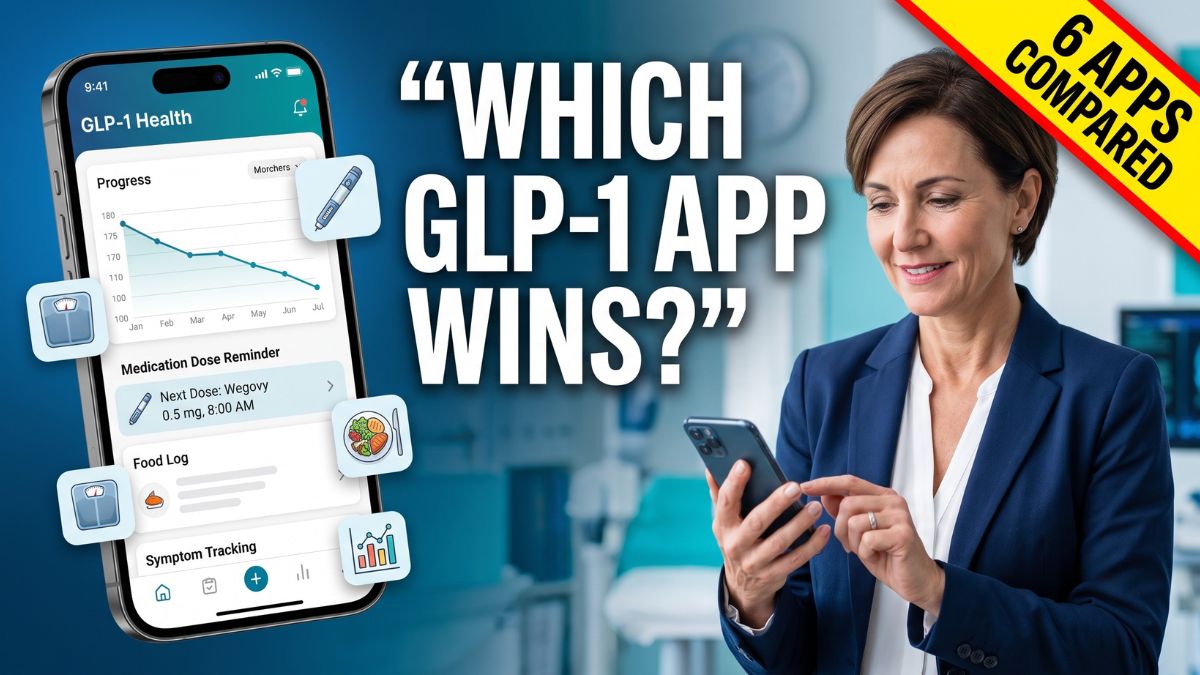

GLP-1 medications such as semaglutide and tirzepatide have changed how many people approach weight management and blood sugar control. But taking the medication is only one part of the process. Tracking doses, weight, side effects, meals, activity and progress can make it easier to understand how your treatment is going.
The challenge is choosing an app that actually fits your routine. Some apps focus heavily on medication reminders, while others combine GLP-1 tracking with nutrition, exercise, weight trends and coaching.
Here are six popular options worth considering, along with what each one does best.
Shotsy
Shotsy is designed specifically for people using GLP-1 medications. Its focus is medication tracking, making it useful for people who want a simple record of injections and treatment progress.
Users can track doses, injection sites, weight and other information related to their medication. The app can also help users maintain a consistent injection schedule.
Its biggest advantage is specialization. Rather than trying to be a complete health platform, Shotsy focuses on the information that GLP-1 users are most likely to need.
MyFitnessPal
MyFitnessPal is one of the better-known nutrition and fitness tracking platforms. Although it is not exclusively a GLP-1 app, its broader health-tracking tools can complement GLP-1 treatment.
Users can monitor food intake, calories, exercise, weight and other health metrics. This can be useful for people who want to understand how changes in appetite and eating patterns affect their overall progress.
The downside is that users looking specifically for detailed GLP-1 medication tracking may find the platform less specialized than dedicated apps.
Lose It!
Lose It! focuses primarily on weight management and food tracking. Its large food database and calorie-tracking features make it useful for people who want to monitor eating habits while taking a GLP-1 medication.
The app can help users see longer-term changes rather than focusing only on daily weight fluctuations.
For someone whose main priority is nutrition and weight loss, Lose It! can be a practical choice. However, medication-specific features may not be as comprehensive as those found in apps built specifically around GLP-1 therapy.
Noom
Noom combines weight management with behavioral and educational tools. Its approach places considerable emphasis on understanding eating habits and developing sustainable routines.
For GLP-1 users, this can be helpful because medication may reduce appetite, but long-term weight management still involves habits, food choices and lifestyle factors.
Noom may appeal to people who want more guidance rather than simply entering numbers into a tracker. The trade-off is that some of its features are tied to paid plans.
MyNetDiary
MyNetDiary offers food, calorie, weight and exercise tracking, along with tools designed to support weight-management goals.
Its detailed nutrition features can be useful for GLP-1 users who want to pay closer attention to what they are eating. This may become particularly relevant when reduced appetite makes it harder to consume enough protein, fiber or other nutrients.
The app is broader than a dedicated medication tracker, so it may work best for users who want one place to monitor several aspects of their health routine.
Medisafe
Medisafe takes a different approach. Rather than focusing primarily on weight management, it is built around medication management and reminders.
That can make it useful for people who take several medications alongside a GLP-1 drug. Users can set reminders and keep track of their medication schedule, helping reduce the chance of missed doses.
Its strength is medication organization rather than nutrition or weight-loss coaching. Someone looking for detailed food and weight analytics may need another app alongside it.
Comparison
| App | Best for | Main strength |
|---|---|---|
| Shotsy | GLP-1 users | Medication and injection tracking |
| MyFitnessPal | Nutrition tracking | Food and fitness logging |
| Lose It! | Weight management | Calorie and weight tracking |
| Noom | Behavioral support | Coaching and habit development |
| MyNetDiary | Detailed nutrition | Food and health tracking |
| Medisafe | Medication reminders | Medication scheduling |
Choosing
The best GLP-1 tracking app depends on what you actually want to monitor.
If medication doses and injection information are your priority, a dedicated option such as Shotsy may make more sense. If food and calorie tracking matter most, MyFitnessPal, Lose It! or MyNetDiary may be more suitable.
People who prefer structured behavioral guidance may find Noom more appealing, while Medisafe can be useful when medication reminders are the main concern.
It is also worth checking privacy policies, subscription costs, device compatibility and whether specific features are available in your country before choosing an app. App features can change over time, so the current listing and pricing should be checked before subscribing.
A tracking app can help organize information, but it does not replace medical care. GLP-1 doses, side effects, medication changes and concerns about nutrition should be discussed with a qualified healthcare professional.
Ultimately, the best app is the one you will actually use consistently. A simple tracker that becomes part of your routine can be more useful than a feature-packed platform that feels too complicated to maintain.
FAQs
What is the best GLP-1 tracking app?
The best app depends on the features you want to track.
Can GLP-1 apps track injections?
Some apps can record doses, dates and injection sites.
Can these apps track weight?
Yes. Several options include weight tracking and progress charts.
Can GLP-1 apps replace medical advice?
No. They should support, not replace, professional medical care.
Are GLP-1 tracking apps free?
Some offer free features, while others require subscriptions.