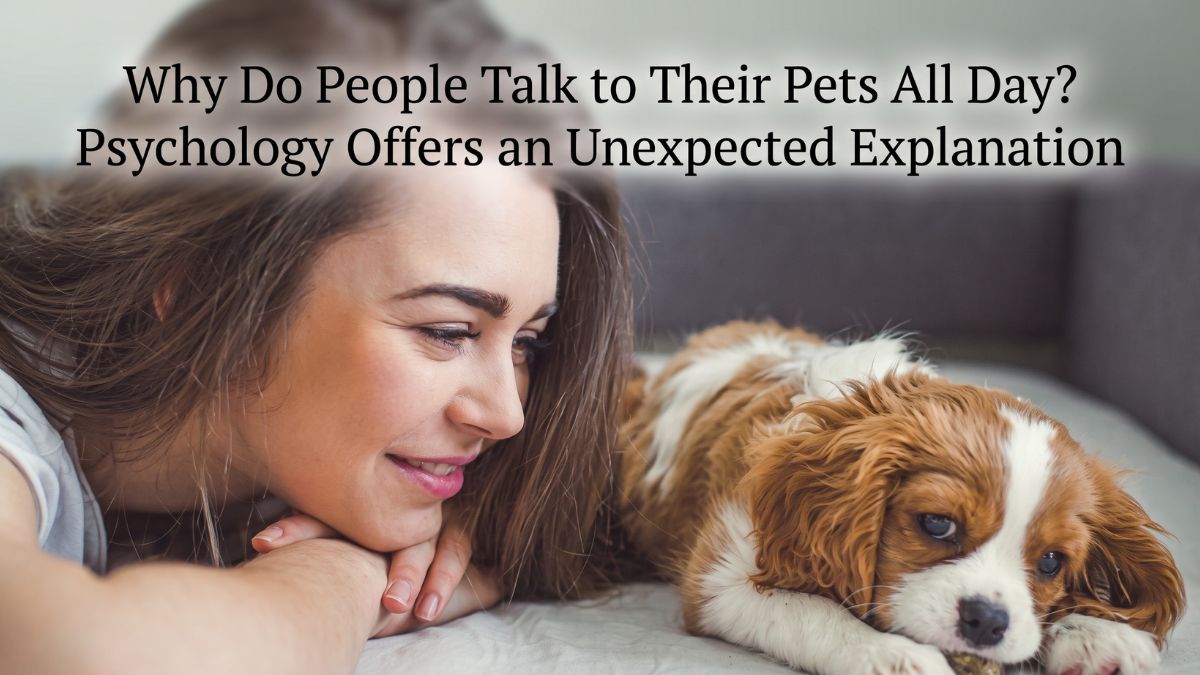
Talking to a pet as though it were another person is common. Owners may describe their day to a dog, ask a cat where it has been, or explain what they are about to do while preparing dinner. To an outside observer, these conversations can seem unusual. But psychology and research into human-animal relationships suggest there are understandable reasons behind the habit.
People are naturally inclined to interpret responsive behaviour as social communication. Pets look at us, move toward us, react to our voices and develop predictable routines around us. Although they cannot participate in a human conversation in the usual sense, these responses can create a genuine feeling of interaction.
That may be one reason people can find it easy to talk openly with animals, particularly when they want attention without criticism or pressure.
Instinct
Humans are naturally inclined to attribute thoughts, feelings and intentions to things around them. Psychologists refer to this tendency as anthropomorphism.
Nicholas Epley, a behavioral scientist at the University of Chicago, has studied why people attribute human characteristics to nonhuman entities. Anthropomorphism is not necessarily a sign that someone is confused about what an animal is. Instead, it can reflect ordinary cognitive processes involved in understanding other minds.
Pets provide plenty of signals for these processes to work with. A dog may look toward its owner when spoken to, follow someone from one room to another or become excited when it hears a familiar word. A cat may approach when its name is called or settle beside its owner at a particular time of day.
These behaviours can make an interaction feel social even when no spoken response is possible.
When someone asks their dog, “Do you want to come upstairs?” they generally know the animal cannot answer in English. The question can nevertheless become part of a familiar routine that strengthens the sense of companionship.
Bonding
The relationship between people and pets also involves repeated physical and social interactions.
Research led by Miho Nagasawa at Azabu University examined the relationship between dogs and their owners and found that mutual gazing was associated with increased oxytocin levels in both.
Oxytocin is involved in social bonding and attachment. The findings have been discussed as evidence of a biological component in the close relationship that can develop between dogs and humans.
A pet’s daily routine contains many opportunities for interaction. There may be a greeting when the owner returns home, physical contact while sitting together, eye contact during feeding and regular periods of play or relaxation.
These repeated experiences can reinforce familiarity and attachment.
As a result, talking to a pet is rarely just about the words being spoken. The conversation takes place within a wider relationship built through thousands of small interactions.
Listening
One reason people may find animals comfortable to talk to is the absence of many social pressures associated with human conversation.
A human listener can interrupt, disagree, offer advice or ask questions. Even a supportive friend may respond in a way that changes the direction of the conversation.
Pets generally do not do this.
They can provide company and respond to tone, proximity and body language without requiring the speaker to explain everything. For some people, that can create a particularly comfortable environment for expressing thoughts.
Someone might describe an embarrassing moment at work to their dog or complain about a difficult day while their cat sits nearby. The animal does not need to understand every sentence for the person to experience the interaction as comforting.
This does not mean pets understand human language in the same way another person does. Rather, their presence can provide an audience without many of the social risks that come with human disclosure.
Processing
Talking aloud can also help people organise their own thoughts.
A person explaining a problem to a pet may discover that the act of describing it makes the situation easier to understand. They might begin by complaining about a disagreement and, while speaking, realise what actually bothered them.
The animal does not have to provide a solution for this to be useful.
In some circumstances, talking to a pet can function almost like thinking aloud. The speaker has a reason to put an otherwise vague thought into words, which can make the issue easier to examine.
Pets may therefore become part of everyday emotional routines. People can rehearse a difficult conversation, describe a decision they are considering or simply recount what happened during the day.
The pet’s role is less about providing an answer and more about providing a safe social setting in which the person can speak.
Support
Research on the human-animal bond has also explored whether pets can provide perceived social support.
One study found that people who had difficulty expressing emotions reported greater social support when they felt close to a pet. This suggests that an attachment to an animal may be particularly meaningful for some people who find certain forms of human communication difficult.
There is an important distinction, however. A pet can provide companionship and emotional comfort, but it cannot perform every function of a human relationship.
A dog cannot offer another perspective during a disagreement. A cat cannot help someone evaluate a difficult decision. An animal cannot replace professional support when someone is experiencing a serious mental health problem.
The most useful way to view the relationship is therefore not as a choice between pets and people. For many owners, animals can provide one form of connection alongside friendships, family relationships and other sources of support.
Balance
Talking to a pet throughout the day is not, by itself, evidence that someone is lonely or socially disconnected. It can be a normal expression of attachment, a way of narrating daily life or simply part of the routine people develop with animals they care about.
The behaviour also makes sense from a psychological perspective. Humans are highly responsive to social cues, and pets provide enough attention and predictable interaction to make communication feel meaningful.
At the same time, companionship with an animal works best as part of a broader social life. A pet can offer comfort without judgment, but human relationships provide forms of feedback, disagreement, shared experience and practical support that animals cannot.
So when someone talks to their dog in full sentences, the important point may not be whether the dog understands every word. The conversation can give the person an opportunity to express thoughts, reinforce a bond and feel accompanied. Sometimes, simply having a patient listener nearby can make an ordinary day feel a little less difficult.
FAQs
Why do people talk to their pets?
Pets provide companionship and a responsive social presence.
Is talking to pets a sign of loneliness?
Not necessarily. It can be a normal part of pet companionship.
Do pets understand human conversations?
Pets can respond to words, tone and cues without human language.
Can talking to pets help process thoughts?
Yes. Speaking aloud can help people organise their thoughts.
Can pets replace human relationships?
No. Pets offer support but cannot replace all human connections.