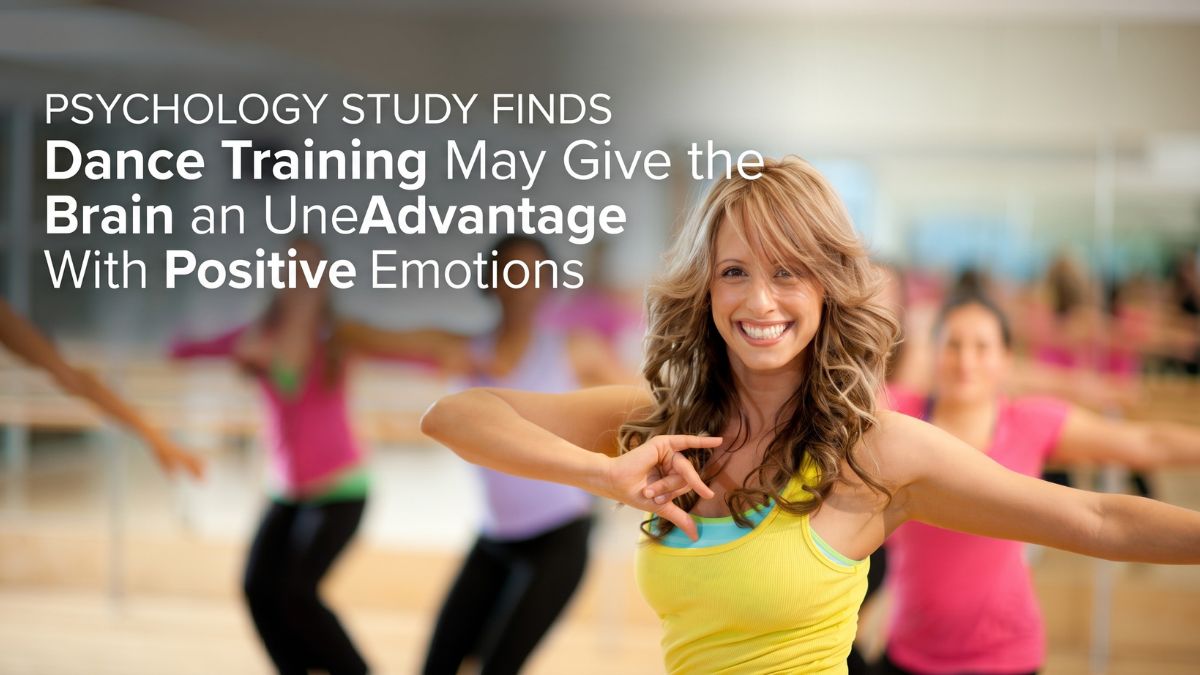
Dance is usually associated with physical fitness, coordination and artistic expression. But new psychology research suggests that its effects may extend to another ability: controlling a movement when an emotional signal tells you to stop.
In a recent experiment, people with dance experience were faster at stopping an ongoing physical response when they were shown happy faces. The same advantage did not appear when they were shown angry or neutral expressions, or when they completed a similar task without emotional information. The study was published in Psychology of Sport & Exercise.
The findings do not show that dance directly improves cognitive control. However, they offer an interesting look at how repeated training involving movement, emotion and attention may be associated with the way people regulate physical actions.
Inhibition
Response inhibition is the ability to stop or withhold an action that has already been initiated. It is an important part of executive functioning and is used in many ordinary situations.
For example, imagine beginning to cross a street and suddenly noticing a vehicle approaching. Your brain must interrupt the movement quickly rather than continuing automatically.
Psychologists distinguish between proactive and reactive inhibition. Proactive inhibition involves preparing for the possibility that an action may need to be stopped. Reactive inhibition occurs when an unexpected signal requires an action already underway to be canceled.
The new study focused on reactive inhibition.
Dance
Dance provides an unusual setting for studying this ability because it combines movement with emotional information.
Dancers have to coordinate precise physical actions with music, timing and changes in their surroundings. Depending on the style, they may also need to communicate emotional states through facial expressions, posture and movement.
Stuti Mehta and Rashmi Gupta of the Indian Institute of Technology Bombay wanted to investigate whether this combination of physical and emotional training might be linked to differences in response inhibition.
The researchers recruited 83 young adults, including 45 dancers and 38 people without dance experience. Participants in the dance group had completed at least six months of formal training and currently practiced for a minimum of six hours each week.
The researchers also considered participants’ general physical activity so that differences could not simply be attributed to being more physically active.
Testing
Participants completed two computer-based response inhibition tasks.
In the first, they saw letters X or O on a screen and had to press a particular keyboard key as quickly as possible. Occasionally, a green circle appeared immediately after the letter. This was the signal that they should stop themselves from pressing the key.
The timing of the stop signal was adjusted in 50-millisecond increments, allowing the researchers to estimate how quickly participants could interrupt their responses.
The second task followed the same basic procedure, but instead of a simple green circle, participants saw photographs of faces showing happy, angry or neutral expressions.
The faces were not relevant to the letter-identification task. Their purpose was to determine whether emotional information could influence participants’ ability to stop an action.
Findings
The first experiment produced no meaningful difference between the two groups.
When participants received the simple green-circle stop signal, dancers and non-dancers showed similar response inhibition. This suggests that dance experience was not associated with a general advantage in stopping physical responses when no emotional information was involved.
The results changed when emotional faces were introduced.
Dancers were better at stopping their responses when the stop signal was a happy face. They made fewer errors with happy expressions than with angry or neutral faces.
Participants without dance experience did not show the same pattern. Their ability to stop a response remained relatively consistent regardless of whether the face was happy, angry or neutral.
This makes the finding more specific than simply saying dancers had better cognitive control. The advantage appeared when response inhibition occurred alongside positive emotional information.
Mood
The questionnaires provided another difference between the groups.
Dancers reported lower levels of stress and depression than the participants without dance experience. They also reported experiencing positive emotions more frequently and showed differences in how they responded to rewards.
Within the dancer group, greater years of dance experience were associated with lower reported stress and depression.
These findings are correlations rather than proof of cause and effect. People who already experience lower stress or greater positive emotion may be more likely to participate in dance, rather than dance itself producing those characteristics.
Emotions
The researchers suggest that repeated exposure to positive emotional expression through dance could potentially influence how dancers process positive information.
Psychological theories of emotion and attention propose that positive emotional states can broaden attention, while negative states may direct attention more narrowly toward potential threats.
If dancers become particularly familiar with interpreting positive emotional cues, a happy face might be processed efficiently. This could leave more cognitive resources available for the response inhibition task.
Previous brain-imaging research has also linked dance training with activity in regions such as the dorsolateral prefrontal cortex and amygdala. These areas are involved in executive control and emotional processing. Such findings provide a possible neurological context, although they do not establish that these brain changes caused the performance differences observed in this experiment.
Limits
The study has several important limitations.
Most notably, it was based on a comparison between dancers and non-dancers at a single point in time. Because participants were not randomly assigned to begin dance training, the research cannot establish that dancing caused the observed advantage.
Other differences between the groups may have contributed to the results. Personality, previous experiences, motivation or existing differences in emotional processing could all potentially influence who chooses to pursue dance.
The participants were also primarily young adults, so the findings may not apply in the same way to children or older adults. In addition, the dancers practiced different styles, making it difficult to determine whether one particular form of dance produces stronger cognitive effects.
Future studies could follow people before and after they begin dance training. Researchers could also use brain imaging to examine how emotional processing and response inhibition interact in dancers and whether those neural patterns change with training.
Overall, the study adds to growing research on the relationship between physical activity and cognitive functioning. It does not show that dance universally improves self-control, but it suggests that dance experience may be associated with a specific form of response inhibition when positive emotional information is present. The result offers a useful reminder that physical training can involve more than muscles and movement – it can also engage attention, emotion and executive control.
FAQs
Can dance improve cognitive control?
The study found an association, but it did not prove causation.
What is response inhibition?
It is the ability to stop an action that has already started.
Why did happy faces matter to dancers?

Dancers stopped responses more effectively when shown happy faces.
Did non-dancers show the same benefit?
No, their response inhibition did not vary across face expressions.
Does dance reduce stress?
The study found an association, but it cannot establish a direct effect.