
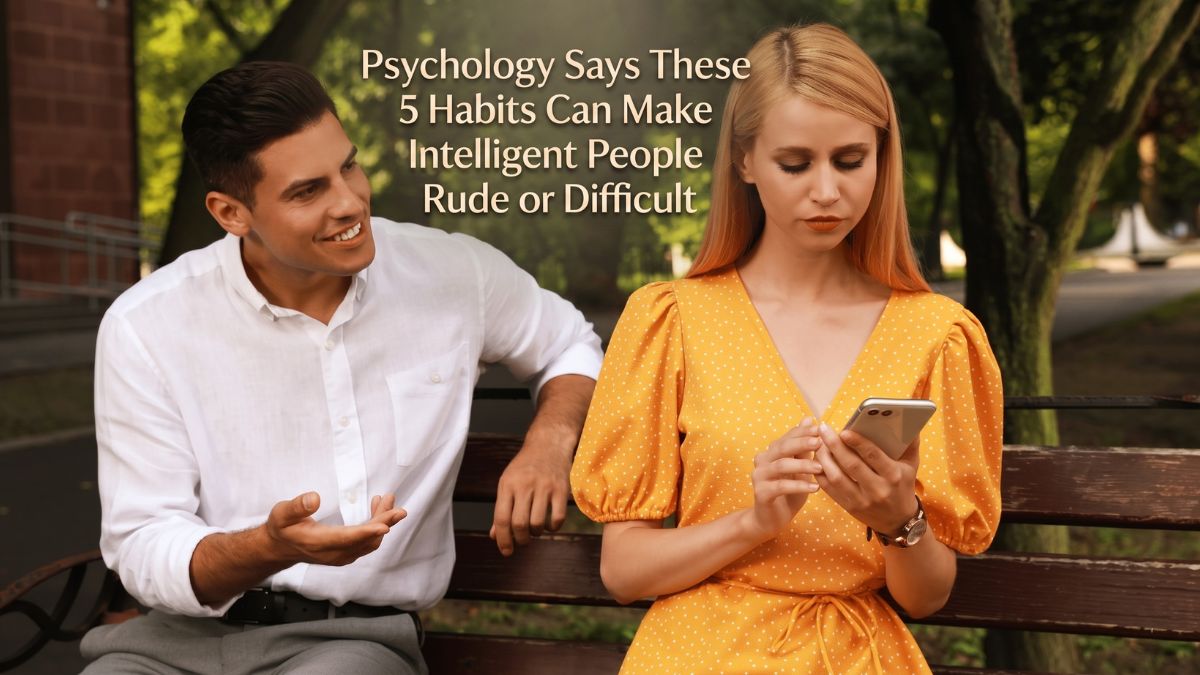
Some behaviours are quickly judged by the people around us. Leaving a gathering early, avoiding small talk or appearing distracted during a conversation can easily be interpreted as rudeness, arrogance or disinterest.
Psychology and behavioural research, however, suggest that behaviour can have more than one explanation. For people with a strong need for mental stimulation, some habits that seem unusual may reflect preferences for solitude, curiosity or deeper forms of engagement.
That does not mean every person who behaves this way is highly intelligent. Nor can any single habit be used to measure intelligence. The research simply offers context for why certain behaviours sometimes associated with cognitive ability may be misunderstood.
Choosing Solitude
Some people prefer spending time alone rather than maintaining a busy social schedule. From the outside, this can look antisocial or unfriendly.
Solitude, however, can provide time for reflection, creative work and personal interests. For someone who enjoys thinking deeply, being alone may be less about avoiding people and more about choosing how to spend limited attention.
A 2016 study published in the British Journal of Psychology examined data from more than 15,000 young adults. The researchers found that frequent socialising was generally associated with greater life satisfaction.
Interestingly, that relationship differed among people with higher cognitive ability. For this group, more frequent socialising was associated with lower life satisfaction.
The finding does not suggest that intelligent people dislike others. Instead, it raises the possibility that some people with higher cognitive ability may experience crowded social schedules differently.
Zoning Out
Someone who appears distracted during a conversation may not necessarily be uninterested.
Mind-wandering can involve the brain shifting attention toward internal thoughts, memories or problems. Research has connected certain forms of mind-wandering with creativity, working memory and incubation, a process in which the mind continues working on a problem away from deliberate conscious effort.
A person may therefore appear to be staring into space while actually thinking through an idea.
Psychology Today has also discussed the possibility that people with greater cognitive resources may experience more mind-wandering because routine activities do not fully occupy their attention.
There is an important qualification, though. Frequent distraction can have many causes, including stress, fatigue, attention difficulties and lack of interest. It should not automatically be interpreted as a sign of intelligence.
Avoiding Small Talk
Small talk serves a useful social purpose. Conversations about weather, traffic, weekend plans or everyday events can help people establish familiarity and maintain relationships.
Still, some people find these conversations less rewarding than discussions involving ideas, problems or subjects they find personally meaningful.
This preference can sometimes be mistaken for snobbery. A person who quickly moves away from surface-level conversation may appear uninterested in others when they may simply prefer more substantive discussions.
Some popular psychology publications, including YourTango, have associated this preference with highly intelligent people. But again, communication style is not an intelligence test.
Someone can dislike small talk because of personality, social anxiety, cultural background or simple preference.
Questioning Authority
Curiosity can sometimes make people uncomfortable.
A person who frequently asks why a rule exists, challenges an established process or requests more information may be viewed as difficult. In workplaces, repeatedly questioning decisions can create friction when colleagues simply want to move forward.
But questioning assumptions can also encourage critical thinking.
Clinical psychologist Dr. Joey Lawrence has described highly curious and nonconforming people as individuals who may ask questions others consider uncomfortable because they want to understand the details.
There is a difference between questioning authority constructively and rejecting every rule simply for the sake of disagreement. Critical thinking involves examining evidence and being willing to change one’s position when better information becomes available.
Staying Up Late
Night owls are sometimes described as lazy or lacking discipline. But sleep timing and cognitive performance are more complicated than that stereotype suggests.
A 2024 UK study cited by Upworthy reported differences in cognitive test performance between people with different sleep patterns. In two tests, night owls scored 13.5% and 7.5% higher than early risers, while intermediate sleepers also performed better than early risers in the reported results.
These findings do not mean staying awake late makes someone more intelligent.
Sleep duration and sleep quality remain important for cognitive and physical health. A person who regularly sacrifices sleep may experience problems with attention, memory and mood regardless of when they naturally prefer to sleep.
The findings simply challenge the assumption that waking early is automatically evidence of greater discipline or cognitive ability.
The Bigger Picture
None of these behaviours should be treated as a shortcut for identifying intelligence.
An intelligent person can enjoy large social gatherings, make small talk, follow established rules and wake up early. Likewise, someone who prefers solitude or stays up late is not automatically highly intelligent.
Human behaviour rarely has a single explanation. The same action can reflect personality, circumstances, mental health, habits, culture or cognitive preferences.
What these findings do offer is a reminder to be cautious about judging behaviour from the outside. Someone leaving a party early may simply be tired. Someone zoning out may be thinking. Someone asking difficult questions may be trying to understand rather than challenge.
Rather than treating unusual habits as proof of intelligence, psychology provides a more useful lesson: behaviour needs context. What looks like rudeness, disinterest or nonconformity from the outside may sometimes have a different explanation, but it is the broader pattern and circumstances that matter.
FAQs
Does solitude mean someone is intelligent?
No, solitude can reflect many personality and lifestyle preferences.
Is zoning out a sign of intelligence?
Not necessarily; mind-wandering has several possible explanations.
Why do some people dislike small talk?
They may prefer conversations that offer more mental stimulation.
Does questioning authority show intelligence?
It can reflect curiosity and critical thinking, but not always.
Are night owls more intelligent?
Sleep timing alone does not determine intelligence.