
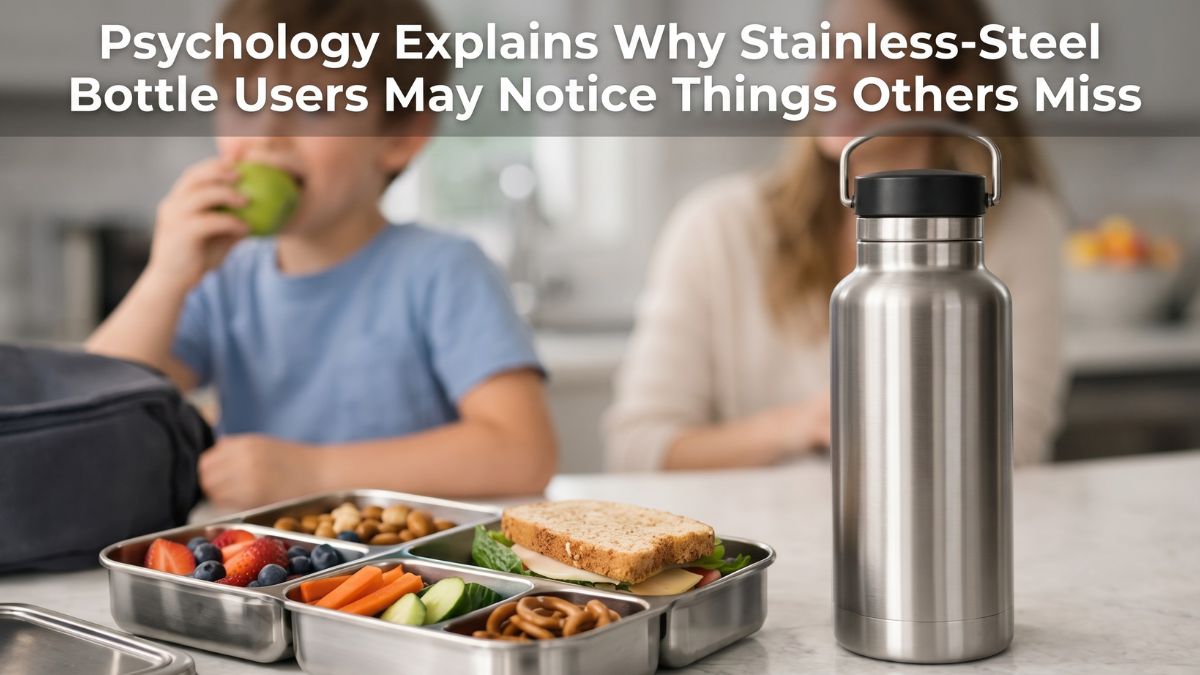
Carrying a stainless-steel bottle may seem like a simple everyday choice, but the reasons behind that choice can reveal something about how people approach comfort, sustainability and routine. For many, the appeal is practical: stainless steel is durable, reusable and can help keep water, coffee or tea at a preferred temperature.
Still, psychologists and behavioral experts sometimes point to broader patterns that can influence why certain products become part of a person’s daily routine. Does choosing a reusable bottle really say something about personality? Not necessarily on its own, but the habits surrounding that choice can offer some interesting clues.
Sensory Needs
One possible connection involves sensory sensitivity. Some people are more attentive to subtle changes in taste, smell, temperature, texture or other physical sensations.
Stainless steel can appeal to this group because it generally does not hold onto odors and flavors as readily as some other materials. Someone who dislikes lingering tastes may therefore prefer a bottle that keeps different drinks from affecting one another.
Consider the familiar experience of drinking water from a container that previously held a strongly flavored drink. Even after washing, a faint taste or smell can sometimes remain. For a person with greater sensory awareness, that small difference may be surprisingly noticeable.
This does not mean every stainless-steel bottle user has heightened sensory sensitivity. Product choice alone cannot establish a psychological trait. It is better understood as one possible reason among many.
Long-Term Thinking
Durability is another major attraction. Stainless steel bottles are generally designed for repeated use, which can make them appealing to people who prefer buying something once and using it for years.
That choice reflects a broader preference for long-term value over short-term convenience. Instead of repeatedly purchasing disposable bottles, someone may choose a reusable container that becomes part of their daily routine.
The same thinking can appear in other areas of life. A person might repair an item instead of replacing it, choose quality over convenience or plan purchases carefully.
However, personality should not be inferred too quickly from a single possession. Someone may simply like the look, feel or functionality of stainless steel.
Environmental Values
Sustainability is another obvious reason people make the switch.
Reusable bottles can reduce reliance on disposable plastic containers, particularly when someone uses the same bottle every day. For environmentally conscious consumers, that practical benefit can fit into a larger set of habits involving recycling, reducing waste and making more deliberate purchases.
In this sense, the bottle becomes less of a personality marker and more of a visible expression of personal values.
People often use everyday products to reinforce the kind of lifestyle they want to maintain. A reusable bottle sitting on a desk can serve as a small reminder to drink water while also supporting a preference for reducing unnecessary waste.
Daily Routine
There is also a psychological benefit to familiar objects. Everyday routines can provide structure, particularly during busy or stressful periods.
A bottle that travels from the kitchen to the office, gym, car or bedside table becomes part of that routine. Filling it in the morning may signal the beginning of the day, while carrying it throughout the afternoon can act as a reminder to stay hydrated.
This is not unique to bottles. People often develop attachments to ordinary objects that make daily life feel predictable. A favorite mug, notebook, pen or pair of headphones can serve a similar role.
Emotional Support
Some therapists have described certain everyday objects as providing a form of emotional comfort. A familiar object can give a person something physical to hold, touch or focus on when they feel uncomfortable.
For some people, carrying a bottle may function in this way during stressful situations. Holding it can provide a small physical anchor when speaking in public, attending a difficult meeting or navigating an unfamiliar environment.
The effect should not be overstated. A water bottle is not a treatment for anxiety, and there is no evidence that stainless steel itself has a special calming property.
Rather, the comfort may come from familiarity and the act of having something predictable within reach.
Personal Choice
Ultimately, there is no psychological profile that applies to everyone who carries a stainless-steel bottle. People choose them for many reasons, including durability, appearance, temperature control, convenience, environmental concerns and personal preference.
Sensory sensitivity may influence the decision for some users, particularly those who notice changes in taste or smell. Long-term thinking may matter to others, while sustainability or routine may be the strongest motivation for someone else.
The interesting point is not that a bottle can diagnose personality. It is that seemingly ordinary consumer choices can sometimes reflect the values, preferences and routines people have built into everyday life. A stainless-steel bottle may simply be a practical container, but for its owner, it can also represent sustainability, consistency, sensory comfort or a preference for something dependable.
FAQs
Why do people prefer stainless-steel bottles?
They offer durability, reusability and temperature control.
Can bottles reflect personality?
Sometimes, but one product cannot define someone’s personality.
Are some people more sensitive to bottle tastes?
Yes, some people notice tastes and odors more strongly.
Can a bottle reduce stress?
A familiar object may provide comfort during stressful moments.
Are stainless-steel bottles eco-friendly?
Reusable bottles can reduce reliance on disposable plastic.