A recipe you never tried. A dress you never bought. A quote you forgot. A travel destination you never visited. A message that seemed important at the time.
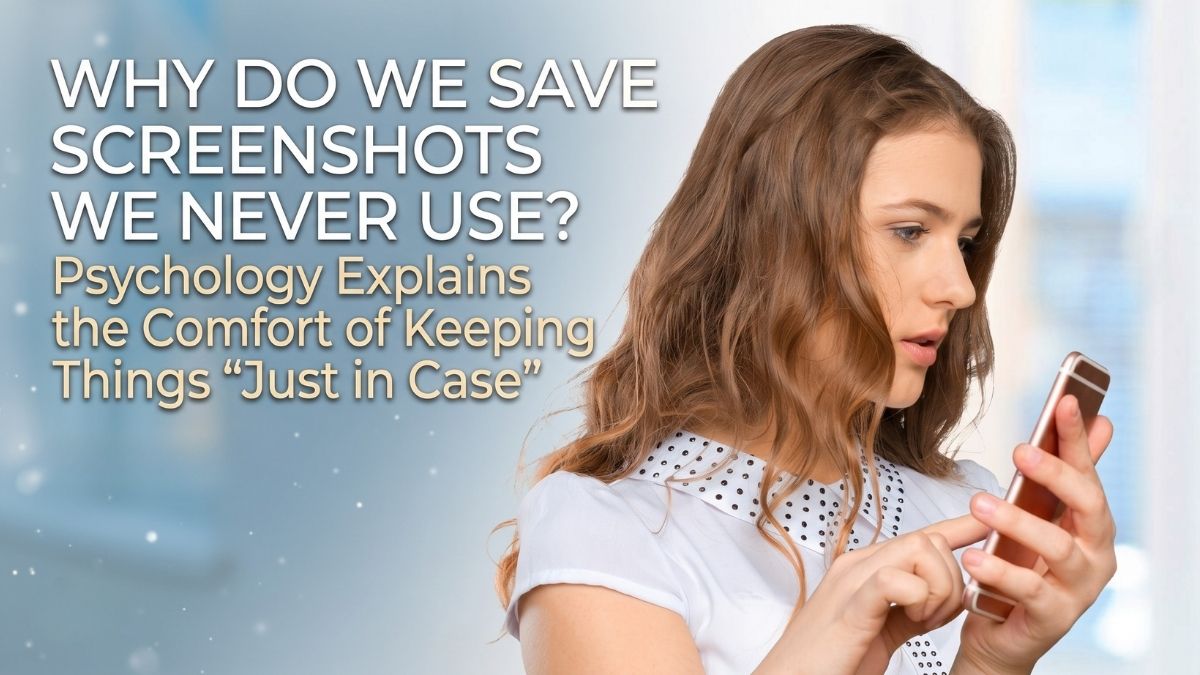
For many people, phone galleries gradually fill with screenshots that may never be opened again. Yet deleting them can feel strangely difficult. Why keep something you have no immediate plans to use?
Psychological research suggests that saving digital information can sometimes provide a sense of future security, control and preparedness. Research into digital hoarding has identified several reasons people retain digital material, including anticipated usefulness, sentimental value, control and links to personal identity.
That does not mean that everyone with a crowded screenshot folder is a digital hoarder. Ordinary digital saving is common and exists across a broad range of behaviors.
Memory
One of the simplest reasons people save screenshots is the fear of forgetting.
Imagine finding an article with useful career advice. You think you will read it later, but instead of relying on your memory or searching for the page again, you take a screenshot.
The image then acts as a form of external memory. The information no longer has to be remembered entirely in your head because it has been stored somewhere accessible.
You may never return to it. Still, knowing that the information is there can provide reassurance.
Research on digital accumulation suggests that anticipated usefulness and a desire for control can contribute to saving behavior. The screenshot can therefore have psychological value even when it is never actually used.
Possibilities
The phrase “I might need this someday” captures another important part of the behavior.
You might screenshot a restaurant recommendation, a workout routine, a job advertisement or a holiday destination without having a definite plan to use it.
Instead, you are preserving an option.
This can be understood through the idea of anticipated utility. Information that might become useful later can feel valuable enough to keep today.
A 2026 study examining digital hoarding surveyed 513 users and reported associations between digital hoarding and information utilization, with self-efficacy and fear of missing out playing mediating roles.
The finding helps explain why saving can feel worthwhile even when there is no immediate use for the material. The possibility of future usefulness may be enough.
Storage
Digital storage has changed the practical cost of keeping things.
Physical possessions occupy visible space. A pile of papers eventually fills a drawer, while clothes fill a wardrobe. Screenshots, by comparison, can accumulate quietly.
Saving another image usually requires little effort and creates no immediate physical clutter. That makes deletion less urgent.
Research into digital possessions suggests that the relatively low cost of storing files can encourage accumulation. Perceived control and anticipated usefulness can also contribute to the decision to retain material.
The phone can therefore function as a kind of psychological safety net. The thought is not necessarily, “I need this now.” It may simply be, “I have it if I need it later.”
Uncertainty
Screenshots can also help people manage uncertainty.
People often prefer knowing that useful information is available rather than worrying that they may lose it. Saving something can create a sense that one small uncertainty has been dealt with.
Consider someone planning a trip who saves several hotels, restaurants and travel tips. They may eventually use only one or none of them.
The saving process can still create a feeling of preparation. The person has gathered possibilities and reduced the need to make every decision immediately.
In that sense, a screenshot can represent more than information. It can represent an option that has been preserved.
Intentions
Some screenshots are connected to unfinished intentions.
You might save a recipe because you plan to cook it, a fitness routine because you intend to exercise or an article because you want to read it later.
The Zeigarnik effect, traditionally associated with psychologist Bluma Zeigarnik, proposed that unfinished activities can remain psychologically accessible. However, modern research has produced more mixed findings, so the effect should not be treated as a universal explanation for screenshot saving.
Still, a saved screenshot can serve as a digital reminder of an unresolved intention.
It quietly says, “I have not decided to give up on this yet.”
That does not mean every unused screenshot creates ongoing psychological tension. Many are simply forgotten. But some may represent possibilities that a person has not consciously closed.
Identity
Not every screenshot is saved because it might be practically useful.
Some images reflect aspirations or aspects of personal identity. A person might save photographs of a dream home, an inspirational quote, a fitness goal, a style they like or a destination they hope to visit.
This connects with extended-self theory, associated with psychologist Russell Belk. The theory proposes that possessions can become connected to how people understand themselves.
Research into digital hoarding has identified identity-based motivations alongside instrumental and sentimental reasons for keeping digital material.
A screenshot can therefore represent more than “something I may need.” It can also represent “something I value” or “someone I would like to become.”
Hoarding
It is important to distinguish ordinary screenshot saving from digital hoarding.
Having hundreds or even thousands of screenshots does not automatically indicate a psychological disorder. Research on digital hoarding is still developing, and digital accumulation can occur at different levels and for different reasons.
Concern may arise when digital accumulation becomes difficult to manage, deletion causes significant distress or the volume of stored information interferes with everyday functioning.
For most people, however, a large screenshot folder is simply part of how digital technology has changed information storage.
The difference between physical and digital possessions makes it easier to keep things without immediately confronting the consequences of accumulation.
Security
The interesting part of screenshot saving is that the psychological benefit may occur at the moment the information is stored.
You have captured it. You have reduced the chance of losing it. You have preserved a future option.
That can create a modest sense of preparedness and control even if the screenshot is never opened again.
So if your phone contains thousands of unused screenshots, the behavior does not necessarily mean you believe every image is essential. It may reflect a simpler thought: “I am not sure whether I will need this someday, so I would rather keep it.”
In a world where digital storage is inexpensive and almost effortless, saving can become an easy way of managing uncertainty. The screenshot folder may therefore be less a collection of things you use and more a record of possibilities you once wanted to keep open.
FAQs
Why do people save unused screenshots?
They may want to preserve information for possible future use.
Is saving screenshots a disorder?
No, ordinary screenshot saving is common and not a disorder.
Why is deleting screenshots difficult?

People may fear losing useful information or future options.
Can screenshots reflect identity?
Yes, saved images can sometimes represent goals or aspirations.
What is digital hoarding?
It involves excessive digital accumulation that can become difficult to manage.