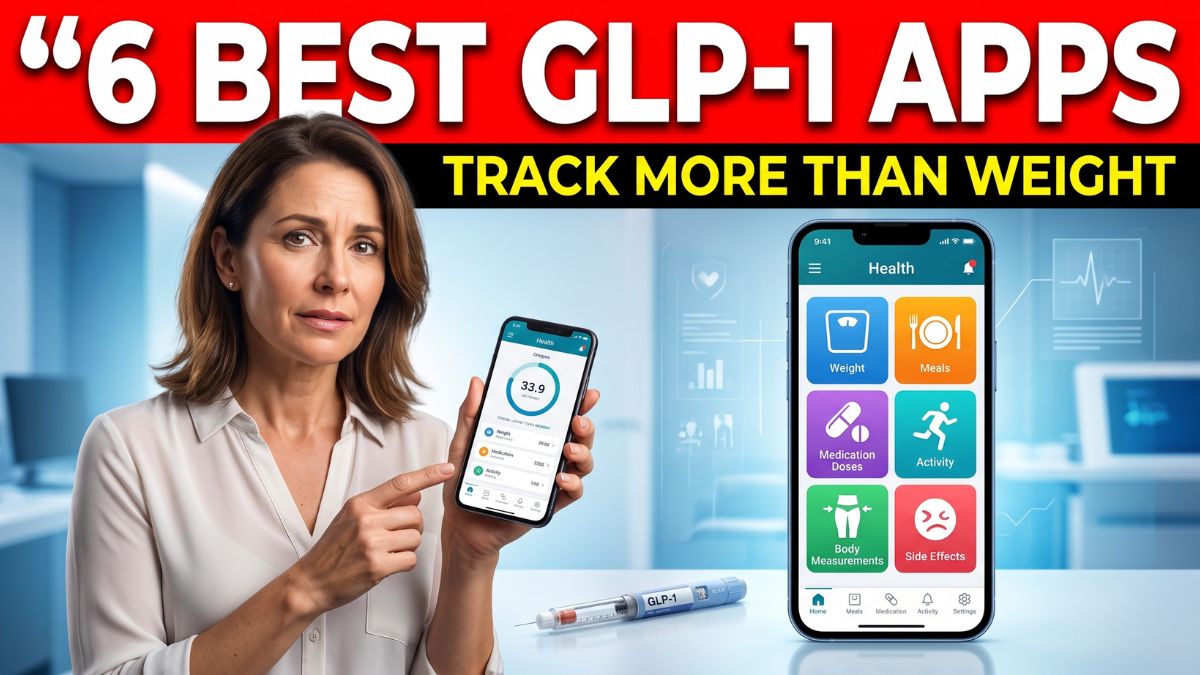
If you’re using a GLP-1 medication, tracking your progress can involve much more than checking the scale. Appetite, meals, physical activity, medication doses, body measurements, and side effects can all provide useful context over time.
Tracking apps can bring some of this information together in one place. They can also make it easier to identify patterns and share useful records with a healthcare professional. The right choice depends largely on what you want to monitor and how much information you prefer to record.
Why
GLP-1 medications can influence appetite, eating habits, body weight, and other aspects of daily health. Progress can also vary from week to week, making individual measurements difficult to interpret on their own.
A tracking app can provide a longer view of these changes. Instead of focusing on one day’s number, you can review information collected over several weeks or months.
The most useful app is usually one that fits naturally into your routine. A complicated system may offer more features but become difficult to maintain consistently.
MyFitnessPal
MyFitnessPal is a widely used option for tracking food and nutrition. Its food database and meal-logging features can help users monitor calories, nutrients, meals, exercise, and weight.
For people who want to understand how their eating patterns change while taking a GLP-1 medication, the amount of available nutrition information can be useful.
However, its range of features may be more than necessary if your main goal is simply to record weight or medication-related information.
Lose It!
Lose It! focuses primarily on weight management and food tracking. Its approach can be useful for people who want a relatively straightforward way to record meals and monitor changes in weight.
Tracking food alongside weight can provide additional context when reviewing progress. For example, you may be able to see how eating patterns change over time rather than viewing each weigh-in separately.
People using GLP-1 medications should still consider factors beyond calories and food intake, since weight is only one part of overall progress.
Cronometer
Cronometer is geared toward users who want more detailed nutritional information. In addition to calories and macronutrients, it can provide information about vitamins, minerals, and other dietary components.
This may be useful for people whose appetite has changed and who want to pay closer attention to the nutritional content of their meals.
The detailed information can also make the app feel more complex than simpler food trackers. It may therefore be better suited to users who want a closer look at nutrition rather than basic meal logging.
Shotsy
Shotsy is designed around medication tracking and can be useful for people who want to keep records of injectable medications.
Medication tracking can help with a practical issue that is easy to overlook: remembering when a previous dose was taken. Having a record can also make it easier to review treatment history.
Available features can depend on the device, version, and subscription level, so it is worth checking the current app information before deciding whether it meets your needs.
Happy Scale
Happy Scale takes a different approach by emphasizing weight trends instead of individual weigh-ins. This can be useful because body weight naturally changes from day to day.
Factors such as hydration, meals, sodium intake, and other normal fluctuations can affect the number on the scale. Looking at a broader trend can provide more context than reacting to each individual measurement.
For GLP-1 users who want to monitor long-term weight changes without focusing too heavily on daily fluctuations, this type of tracking can be helpful.
MeThreeSixty
MeThreeSixty focuses on body measurements and visual changes rather than weight alone. Users can track measurements and create comparisons over time.
This provides another way to assess physical changes when the scale does not tell the whole story. Measurements can sometimes change at a different pace from body weight.
For that reason, a body-measurement tracker may be useful as a supplement to a weight-tracking app, particularly for people interested in monitoring changes beyond the scale.
Choosing
There is no single GLP-1 tracking app that will suit everyone. The best option depends on the information you want to record and how detailed you want your tracking routine to be.
| App | Best For |
|---|---|
| MyFitnessPal | Food and nutrition |
| Lose It! | Weight and food tracking |
| Cronometer | Detailed nutrition |
| Shotsy | Medication tracking |
| Happy Scale | Weight trends |
| MeThreeSixty | Body measurements |
If remembering medication doses is your main concern, a medication-focused app may make the most sense. If nutrition is a priority, a detailed food tracker could be more useful. For users who prefer to look at longer-term weight patterns, a trend-based app may provide a better fit.
Some people may also choose to use more than one app if they want to track different types of information.
Safety
Tracking apps can support your routine, but they are not a substitute for medical care. GLP-1 medications can cause side effects and may require individual monitoring by a healthcare professional.
If you experience concerning symptoms or have questions about your treatment, discuss them with your doctor or another qualified healthcare professional. Do not change your prescribed dose based only on information recorded in an app.
The most useful tracker is generally the one you can use consistently. Whether you want to monitor medication doses, meals, weight trends, body measurements, or several of these together, keeping organized records can provide a clearer picture of changes over time. The goal is not to collect as much data as possible, but to track information that is meaningful to you and useful for your care.
FAQs
What is the best GLP-1 tracking app?
It depends on whether you prioritize weight, food, or medication tracking.
Can apps track GLP-1 injections?
Yes, some apps are designed specifically for medication and injection tracking.
Should I track weight daily?
Daily tracking is optional; trends often matter more than single weigh-ins.
Can GLP-1 apps replace my doctor?
No. Tracking apps support care but cannot replace medical advice.
What else should I track besides weight?
Consider meals, doses, measurements, activity, and side effects.